
Choosing a Water Heater in the Bay Area Isn’t Like Choosing One Anywhere Else
Water heater guides written for a national audience miss the details that matter most in the Bay Area. California has stricter emissions standards than any other state. Your electricity costs roughly double the national average. The water hardness in the Tri-Valley runs moderate to high, which affects tank longevity. And starting in 2030, new gas water heater sales for new construction will be restricted in California, with existing-home replacements following by 2035.
A water heater that makes perfect sense in Texas might be the wrong choice for a home in Pleasanton. Here’s how to pick the right one for where you actually live.
Gas Tank Water Heaters
The gas tank water heater is still the most common unit in Bay Area homes. A 40 to 50-gallon tank heats water continuously and stores it for immediate use. Recovery rates are fast (30 to 40 gallons per hour for a standard atmospheric unit), and the technology is proven over decades.
For Bay Area homeowners, the calculation on gas tanks has shifted. PG&E’s natural gas rates have increased substantially over the past five years, narrowing the operating cost advantage that gas traditionally held over electric. The Department of Energy reports that water heating accounts for about 20% of a typical home’s energy bill, making the fuel source a meaningful financial decision.
A gas tank water heater still makes sense if you’re replacing a failing unit and plan to sell the home within the next few years, or if your electrical panel can’t support an electric alternative without a costly upgrade. For longer-term ownership, the economics increasingly favor a heat pump.
Expect to pay $1,200 to $2,500 installed for a standard gas tank, depending on the brand and any code-required upgrades. Standard models last 8 to 12 years with annual maintenance.
Heat Pump Water Heaters
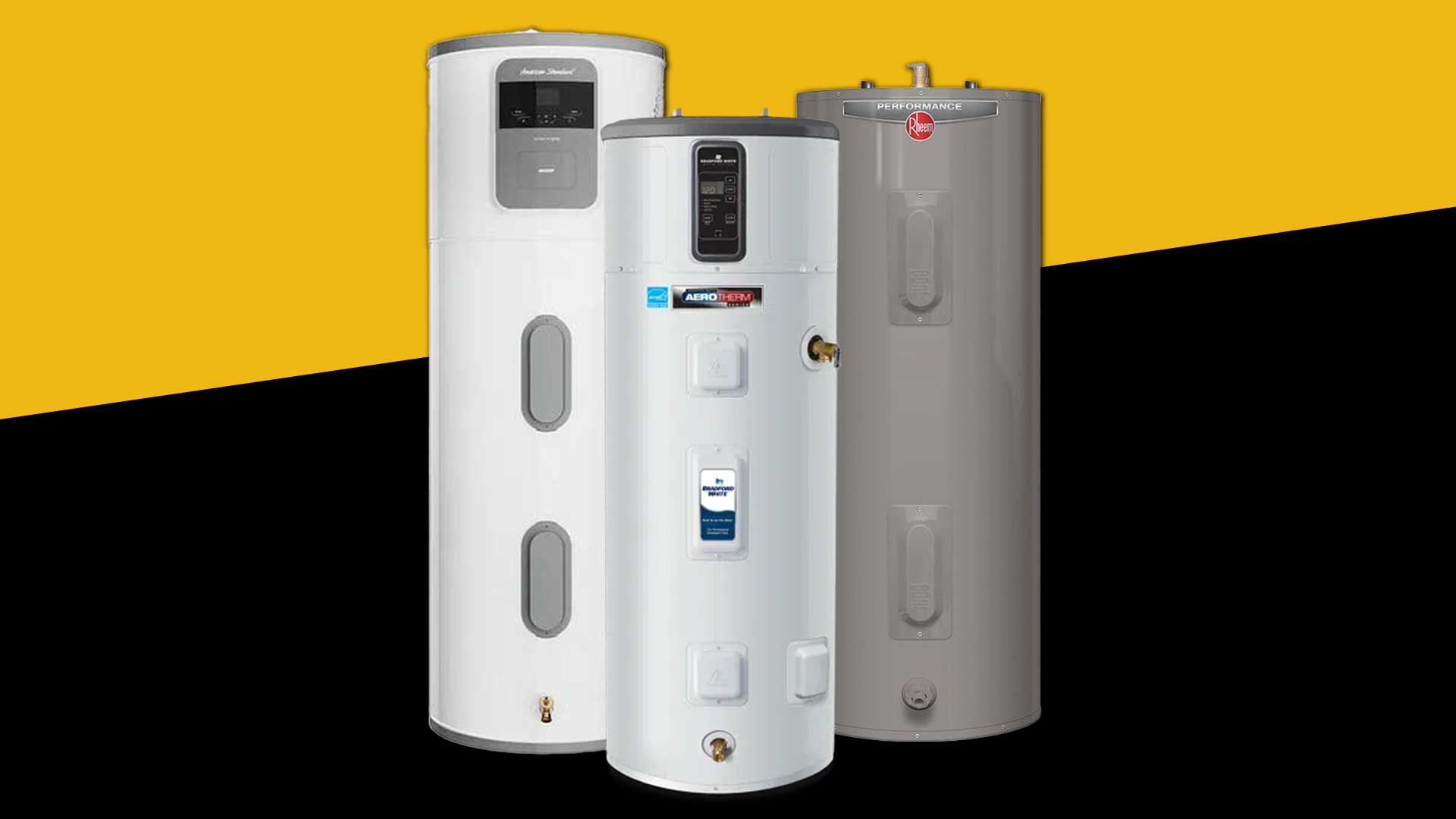
Heat pump water heaters (also called hybrid water heaters) have become the default recommendation for Bay Area homes that are replacing a gas unit with an electric one. The Bay Area’s mild climate is ideal for this technology because the heat pump draws warmth from the surrounding air and operates most efficiently when ambient temperatures stay above 40 degrees. In a Tri-Valley garage, that’s virtually year-round.
According to ENERGY STAR, certified heat pump water heaters can save a typical household $550 per year compared to a standard electric tank water heater. Against a gas tank at current PG&E rates, the savings are smaller but still meaningful, typically $150 to $300 per year.
The upfront cost is higher: $2,500 to $4,500 installed. But the federal tax credit covers 30% of the installed cost (up to $2,000), and California rebates through TECH Clean California and BayREN can reduce the net cost further. Combined incentives can bring the out-of-pocket price close to what you’d pay for a new gas tank. Full details in our tax credits and rebates guide.
Heat pump water heaters do have trade-offs worth understanding: they need space (750 cubic feet of surrounding air), they produce a low compressor hum, and they cool the air around them.
Tankless Gas Water Heaters
Tankless gas units heat water on demand as it flows through a compact, wall-mounted unit. No storage tank means no standby energy loss. You get continuous hot water for as long as you need it, limited by flow rate rather than tank capacity.
The Bay Area’s moderate incoming water temperature (typically 55 to 65 degrees) works in favor of tankless gas units. The lower the temperature rise needed, the higher the flow rate the unit can deliver. A condensing tankless unit rated at 199,000 BTU can provide 8 to 10 gallons per minute in our climate, enough for two showers and a dishwasher running simultaneously.
Installation cost runs $3,500 to $5,500, depending on whether the existing gas line and venting can support the unit. Upgrading from a tank to tankless often requires a larger gas line (3/4 inch minimum) and new venting through a wall or roof. These upgrades add to the installation cost but are one-time expenses.
Tankless gas units last 20 years or more with annual descaling to remove mineral buildup. The Tri-Valley’s water hardness makes this maintenance non-negotiable. Skip it, and the heat exchanger will scale over and lose efficiency within 3 to 5 years. Read more about tankless water heaters.
Tankless Electric Water Heaters
Whole-house tankless electric units require 150 to 200 amps of dedicated electrical capacity. Most Bay Area homes built before 2000 have 100 to 200 amp main panels, and adding that much load typically means a panel upgrade ($2,000 to $5,000).
Point-of-use tankless electric units, small units installed under a single sink, are a different story. They draw 20 to 30 amps and provide instant hot water to one fixture. They work well as a supplement to a central water heater, eliminating the wait for hot water at a distant bathroom or kitchen.
For a whole-house primary water heater in an existing Bay Area home, tankless electric is usually not the most cost-effective option. The electrical upgrade cost alone often exceeds the price difference between tankless electric and a heat pump water heater that doesn’t need one.
What Most Bay Area Homeowners End Up Choosing
For homeowners replacing a gas tank water heater today, the decision typically comes down to three options:
- Gas tank replacement for the lowest upfront cost and simplest installation, understanding that this may be your last gas water heater given California’s regulatory timeline
- Heat pump water heater for the best total cost of ownership, the strongest rebate support, and future-proofing against the gas phaseout
- Tankless gas for unlimited hot water, space savings, and a 20-year lifespan, though this is also a combustion appliance that will eventually face the same regulatory pressure
The right choice depends on your home’s infrastructure, your hot water usage patterns, how long you plan to stay in the house, and your budget. Contact Barnett Plumbing and Water Heaters or call (925) 294-0171 for a recommendation based on your specific situation.