Trusted Plumbing Services in Diablo, CA
Experienced Plumber for Diablo's Historic Estates and Country Club Properties
The galvanized water lines in your 1930s estate barely push water to the second floor. The cast iron drain under the guest house has been backing up after every rain. Your well pump cycles on and off but the pressure tank never holds. These are the problems Diablo homeowners call us about, and they require a plumber who understands what older homes on large rural lots actually need.
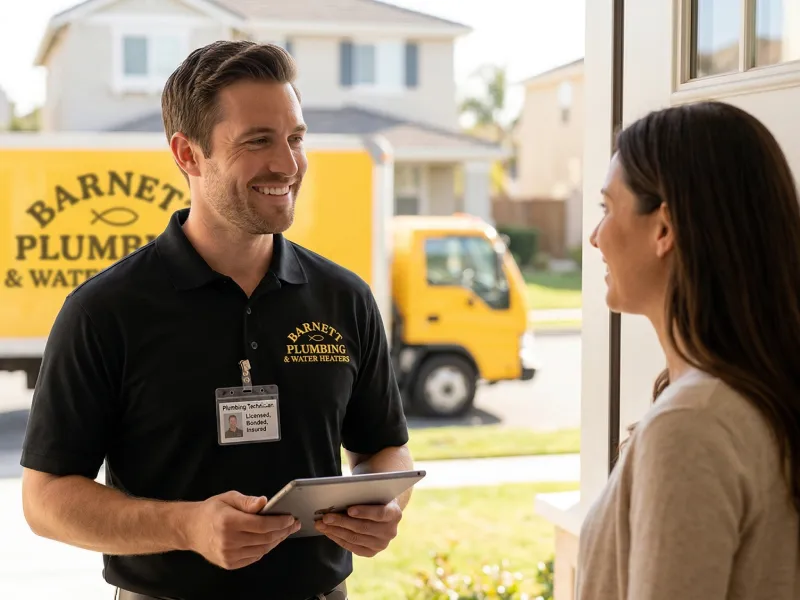
Barnett Plumbing & Water Heaters has served Diablo properties for over 20 years. Our nearest office is in Pleasanton at 4713 First Street, Suite 242, about 20 minutes from Diablo. Call (925) 294-0171 and a Barnett plumber will be on the way.
Full-Service Residential Plumbing for Diablo Homes
Diablo is one of the smallest and most exclusive communities in Contra Costa County. Roughly 390 homes sit on large wooded lots at the base of Mt. Diablo, many tucked behind private roads with long driveways. The housing stock ranges from early 1900s estates built when the Diablo Country Club was founded in 1914 to modern custom rebuilds. About 60 homes carry historic district designation, and nearly 45 percent of all homes were built in the 1950s.
That range means no two Diablo plumbing jobs look alike. One home runs on original galvanized steel from the 1920s. The next has a private well and septic system on a 10-acre lot. The house down the road was rebuilt in 2005 with PEX, a fire sprinkler system, and three tankless water heaters. Every job follows California Plumbing Code (CPC) standards. We pull permits through Contra Costa County and coordinate all inspections.
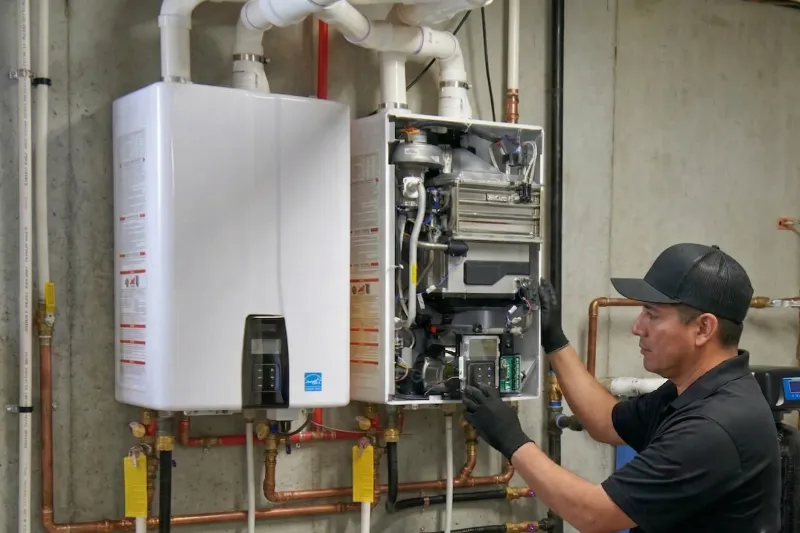
Water Heater Services
Plumbing Services
Tell Us What's Going On. We'll Handle It.
How Diablo's Geography and Terrain Affect Your Plumbing
Elevation and Water Pressure Challenges
Sandy Soils Over Sandstone Bedrock
Mt. Diablo Thrust Fault
Wildland-Urban Interface (WUI) Fire Zone
Plumbing Challenges by Home Era in Diablo
Diablo’s roughly 390 homes span more than a century of construction. The decade your home was built determines what pipe materials are in your walls and what problems are most likely to surface.
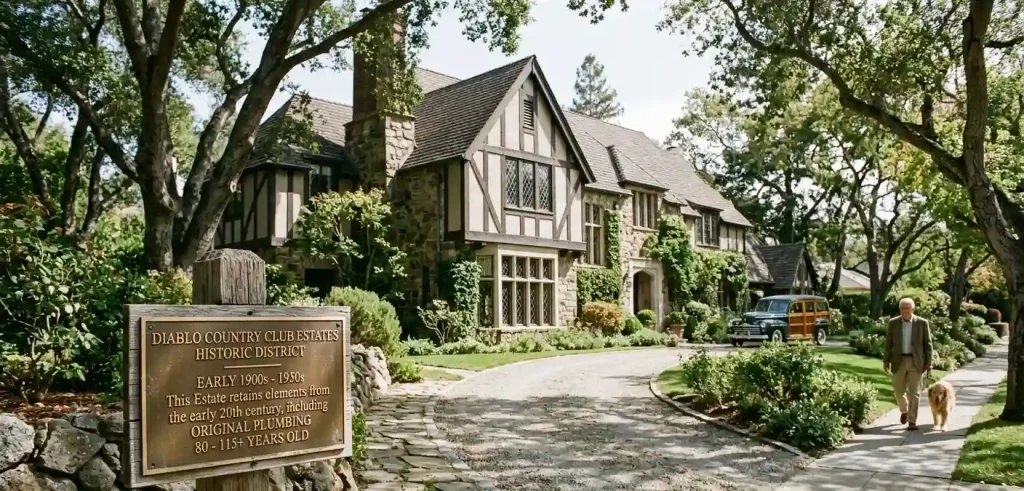
Diablo Country Club Estates
Early 1900s-1950s / Historic District / Original Plumbing 80-115+ Years Old
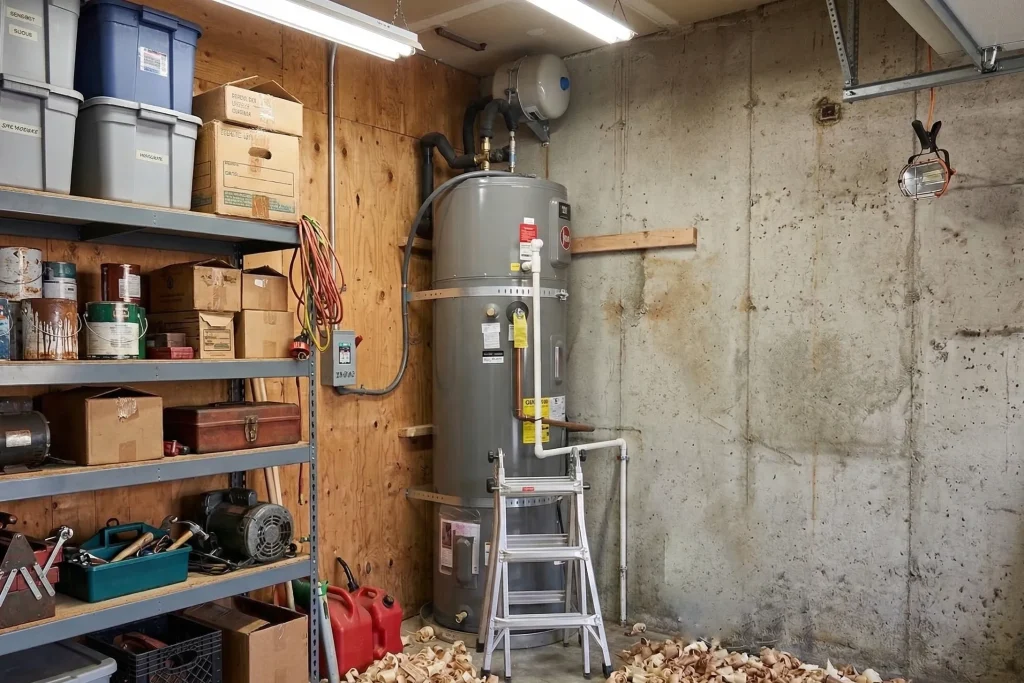
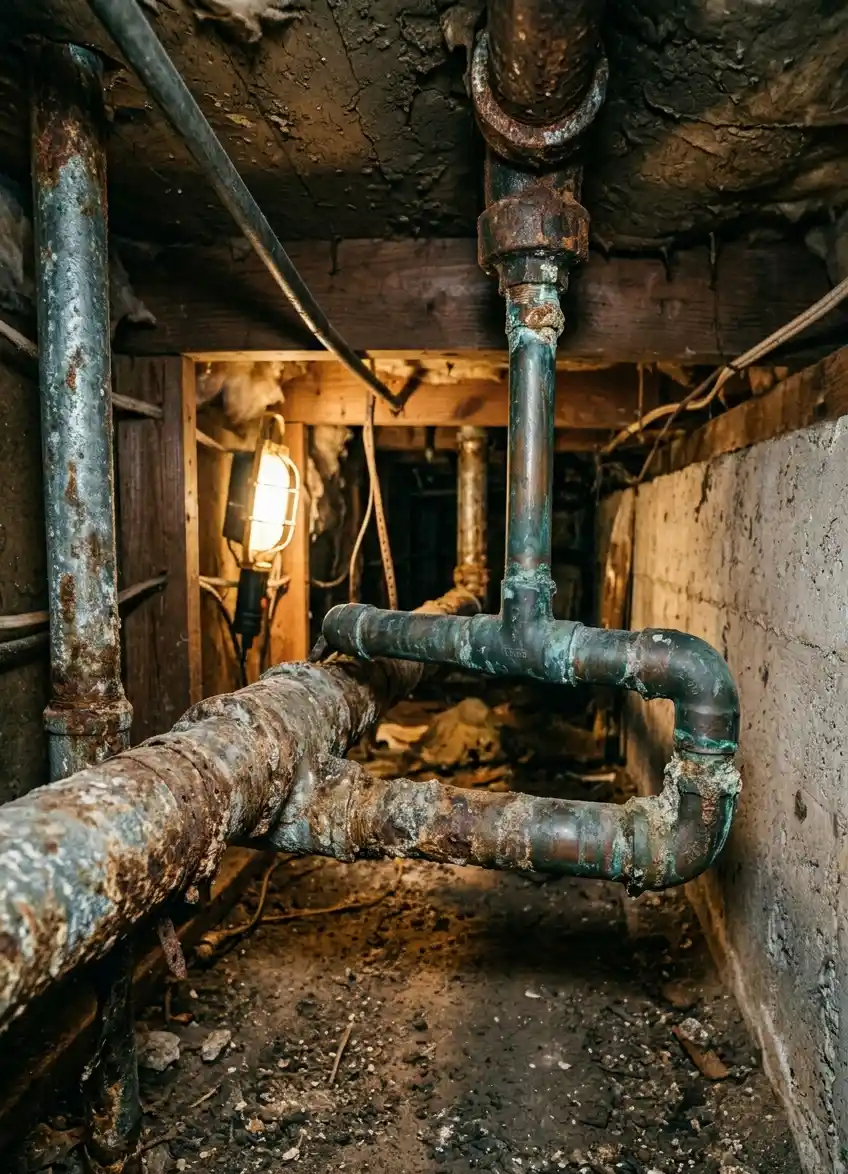
The oldest homes in Diablo date to the founding of the Diablo Country Club in 1914. Some of these estates still run on original galvanized steel water lines and cast iron drains that are 80 to 115 years old. Flow rates have dropped to a fraction of their original capacity as mineral deposits line the inside of galvanized pipes. Cast iron drains develop cracks and separation at joints after decades of ground movement. Some of these homes were originally built without kitchens (designed as country club retreats), with plumbing added in later renovations, creating unusual pipe routing that requires careful inspection before any repair.
Mid-Century Homes (1940s-1950s)
44.8% of Housing Stock / Aging Copper and Cast Iron / Standard Residential
Nearly half of all Diablo homes were built in the 1940s and 1950s. Copper supply lines from this era are approaching or past the 70-year mark, which is the upper end of their expected service life. Cast iron sewer lines are in similar territory. These homes typically have straightforward layouts compared to the earlier estates, but the pipe materials themselves are the issue. Pinhole leaks in copper, joint separation in cast iron, and corrosion at transition fittings where dissimilar metals meet are the most common problems we see in this group.
Modern Rebuilds and Newer Construction
1990s-Present / Custom Luxury / WUI Fire Sprinkler Requirements / Complex Systems
When older Diablo homes are demolished or gutted, the replacements tend to be large custom builds with high fixture counts, multiple water heater zones, radiant floor heating, and integrated fire sprinkler systems required by the WUI designation. Modern materials like PEX and copper are reliable, but the complexity of these systems means that when something does go wrong, diagnosis takes experience. Builder-grade components in even high-end homes can underperform within 8 to 12 years.
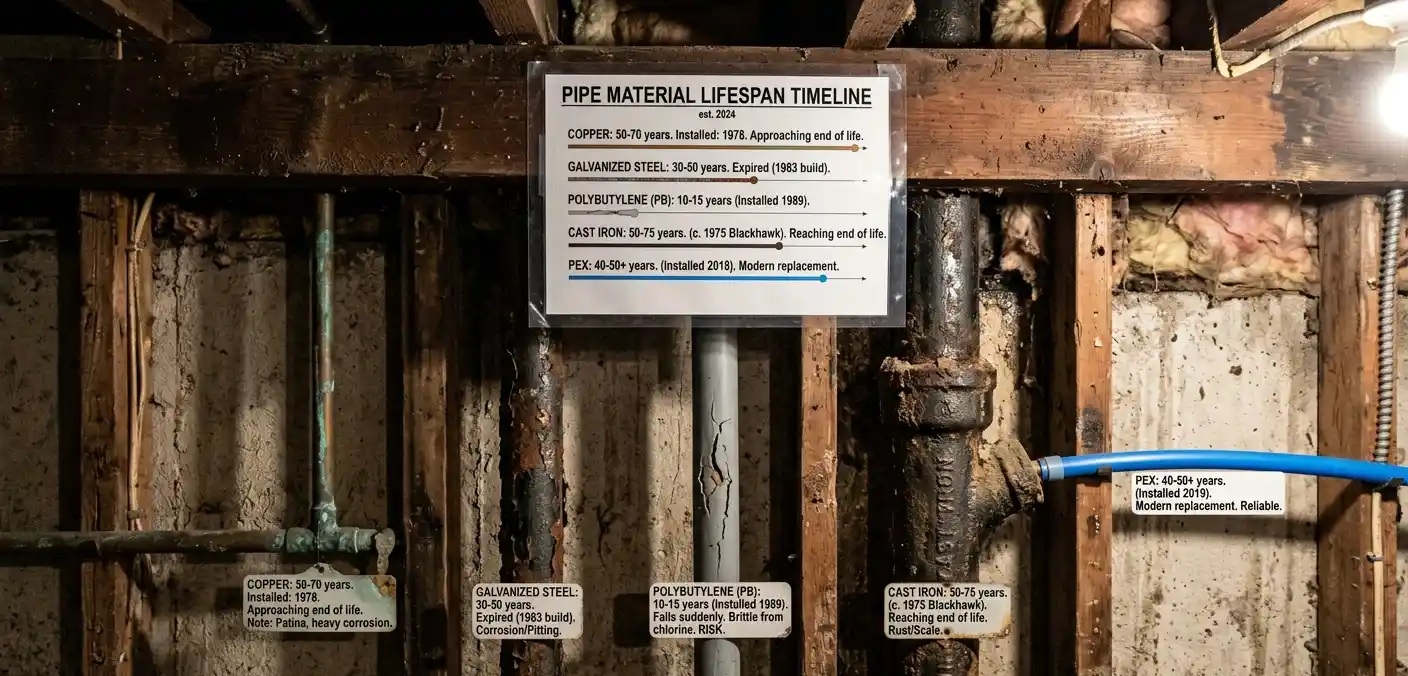
Pipe Material Lifespan Timeline
Galvanized Steel: 30-50 years. Expired for any home built before 1980. In Diablo, many homes have galvanized lines from the 1920s-1940s that are 80-100+ years old.
Cast Iron: 50-75 years. Expired for pre-1960s sewer lines. Cracking and joint separation are common in Diablo’s shifting soils.
Copper: 50-70 years. Approaching end of life for 1950s homes.
PEX: 40-50+ years. Found in modern rebuilds. Vulnerable to rodent damage in rural settings like Diablo’s wooded lots.
Not Sure What's Wrong? Describe It. We'll Figure It Out.
Historic Home Plumbing in Diablo: When Your Pipes Are 80+ Years Old
Galvanized Water Lines from the 1920s-1930s
Galvanized steel was the standard supply pipe material for homes built before the 1950s. After 80 to 100 years, the zinc coating that protected the steel has long since corroded away. The bare steel underneath builds up layers of mineral scale that shrink the internal diameter from three-quarters of an inch down to a quarter inch or less. Water pressure at the faucet drops to a trickle. The corrosion also colors the water brown or orange, especially after the system sits unused for a few hours.
Replacing galvanized lines in a historic Diablo home requires careful routing. Walls may be plaster over lath, not drywall, and floor framing may follow non-standard spacing. We plan pipe paths that minimize damage to original construction while bringing the system up to current code.
Cast Iron Drains Cracking and Separating
Unusual Configurations
Several of the earliest Diablo estates were designed as country club retreats and built without full kitchens. Plumbing for kitchen sinks, dishwashers, and gas lines was added in later renovations, sometimes decades after original construction. This means pipe routing can follow unexpected paths through walls, crawlspaces, and between floors. Accurate diagnosis requires experience with homes that have been modified multiple times over a century of ownership.
Well-to-Municipal Water Conversions
Well Water and Septic Systems in Diablo
Private Well Systems
Homes on private wells depend on a submersible pump, a pressure tank, and a distribution system that the homeowner is responsible for maintaining. Well pumps wear out, pressure tanks lose their air charge, and water quality can change as the aquifer shifts. Hard water, iron, and manganese are common in the foothills around Mt. Diablo and require filtration to protect fixtures and water heaters from scale buildup.
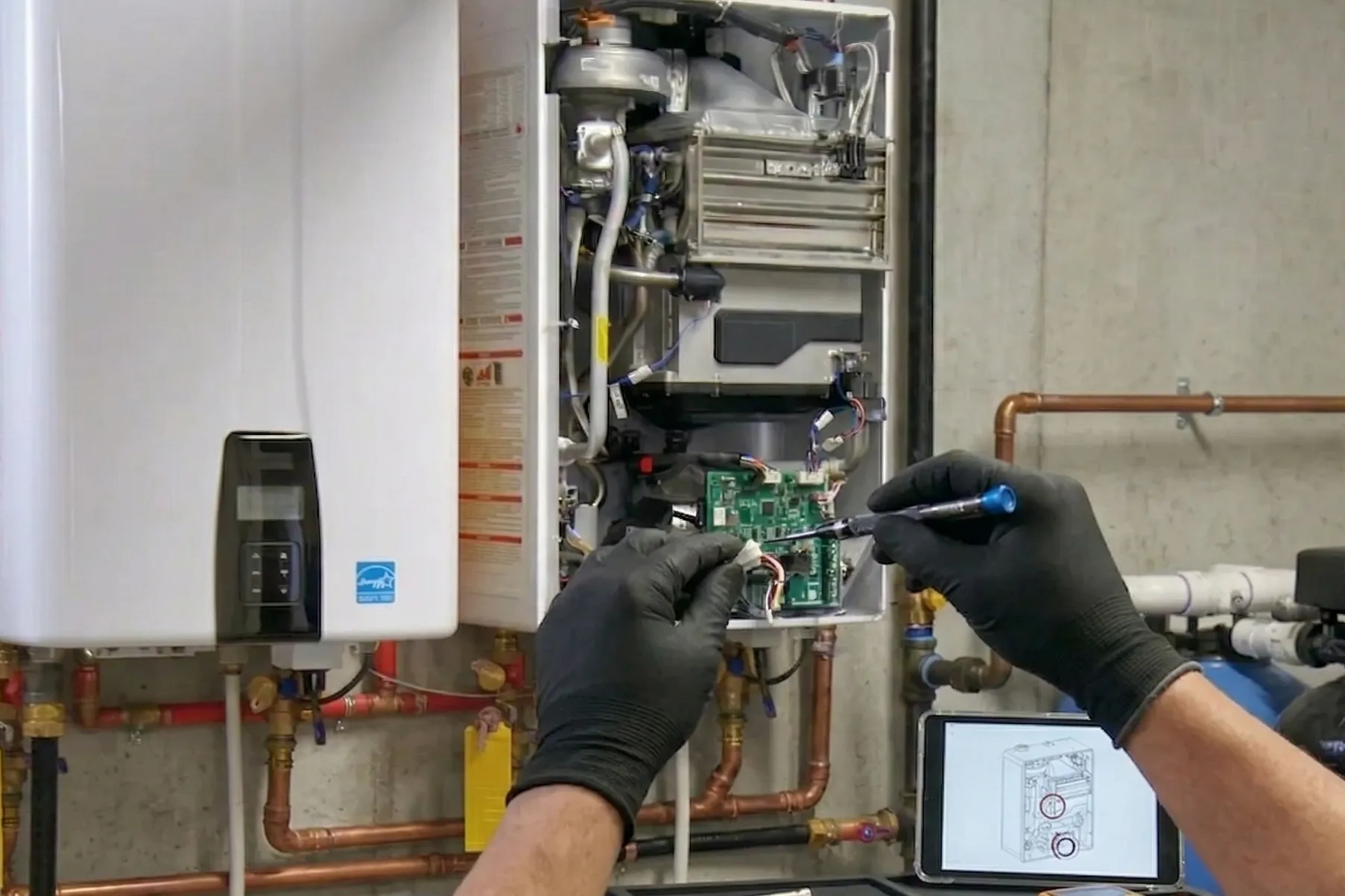
We service well pressure systems, replace failing pumps and tanks, install water treatment systems sized for the actual water chemistry, and help homeowners evaluate whether connecting to EBMUD makes sense for their property.
Septic Systems on Large Lots
Diablo properties on septic handle their own wastewater treatment through a septic tank and leach field (or alternative system). Lot sizes of one to ten or more acres provide the space these systems need, but Diablo’s terrain adds complications. Sloped lots may use low-pressure dose systems or mound systems to work around challenging topography and shallow bedrock.
Septic systems need periodic pumping, distribution box inspection, and leach field monitoring. When a system reaches the end of its life or fails to keep up with a home’s increased water usage (from additions or renovations), a new system design is required. We also evaluate conversion options for properties where connecting to the Contra Costa County sewer system is feasible.
Describe Your Problem. We'll Call You Back Today.
Diablo Plumbing Permits, Codes, and Community Oversight
Diablo is an unincorporated community in Contra Costa County. Plumbing permits are issued through the Contra Costa County Department of Conservation and Development (DCD) via their ePermits Center. Any work that involves replacing concealed pipes, including drain lines, water supply lines, waste lines, and vent pipes, requires a permit. That covers water heater replacement, whole-house repiping, sewer line replacement, new gas line installation, fire sprinkler system work, and any connection to the county water or waste system.
Diablo also has community oversight through the Diablo Community Services District (DCSD) and the Diablo Municipal Advisory Council (DMAC). While these bodies do not issue plumbing permits, they maintain community standards that can affect the scope and timing of exterior work, especially in the historic district.
Minor repairs like fixing a leaking faucet, clearing a drain stoppage, or replacing a toilet do not require a permit. But anything that changes pipe layout or replaces concealed piping does.
When you hire Barnett Plumbing, your permits are filed with Contra Costa County, your inspections are scheduled, and your completed work is documented and code-compliant. You do not touch a single form.
Why Diablo Homeowners Choose Barnett Plumbing & Water Heaters
Over 900 families across the Tri-Valley have left us five-star reviews. We’ve held CA Contractor License #910529 (C-36 Plumbing, C-16 Fire Protection) since 2005. We carry full general liability coverage, workers’ compensation through Benchmark Insurance Company, and a $15,000 bond through American Contractors Indemnity Company.
Our closest office to Diablo is at 4713 First Street, Suite 242, Pleasanton, CA 94566, about 20 minutes from most Diablo properties. We stock American Standard, Rheem, and Bradford White equipment on our trucks through Tri-Valley distributors, so parts and warranty support stay local.
Diablo’s private roads, long driveways, and gated properties add access complexity that many plumbing companies are not prepared for. Our crews work large-lot hillside properties throughout the Tri-Valley. We bring the right equipment, plan for access in advance, and communicate with homeowners about arrival logistics before we dispatch.
Every technician arrives prepared to diagnose your issue and present your options clearly. That includes honest assessments of when a repair makes sense versus when replacement costs less over time.
Call (925) 294-0171 to schedule service.