Sewer Line Repair and Replacement in the Tri-Valley
Licensed Plumbing Professionals with 20+ Years of Underground Experience
A damaged sewer lateral can cause backups into your home, foul odors in the yard, and soggy patches of grass that never dry out. These problems do not improve on their own.
Barnett Plumbing repairs and replaces residential sewer lines from your home to the city main. We offer trenchless methods and traditional open-trench work depending on what your situation calls for.
Signs Your Sewer Line Needs Attention
Sewer line damage builds slowly, then shows up all at once. Watch for multiple drains backing up at the same time, gurgling sounds from toilets when you run a sink, persistent sewage smell near your foundation or yard, and wet spots in the lawn that appear without rain.
Tree root intrusion is the most common cause of sewer line failure in the Tri-Valley. Roots find their way into aging clay or cast iron joints and grow until they block the pipe entirely. Bellied pipe (sections that sag and collect waste) and offset joints are also common in older homes.
Trenchless Sewer Replacement
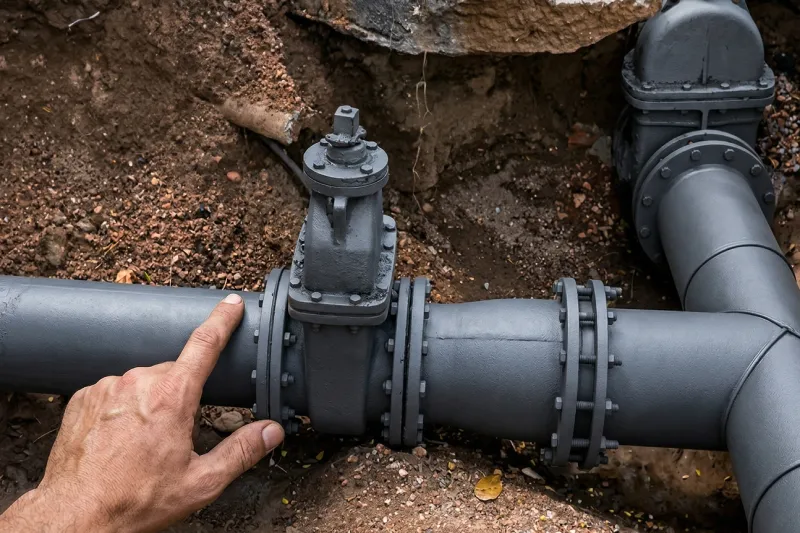
Trenchless methods replace or rehabilitate your sewer line without tearing up the entire yard. We use two primary methods depending on the condition and layout of your existing pipe.
Pipe Bursting
A bursting head is pulled through the old pipe, breaking it apart while simultaneously pulling a new HDPE pipe into place behind it. This method works well when the old pipe is structurally collapsed or heavily root-damaged. It requires only two small access pits rather than a full trench.
Dealing with Sewer Line Problems?
Traditional Open-Trench Replacement
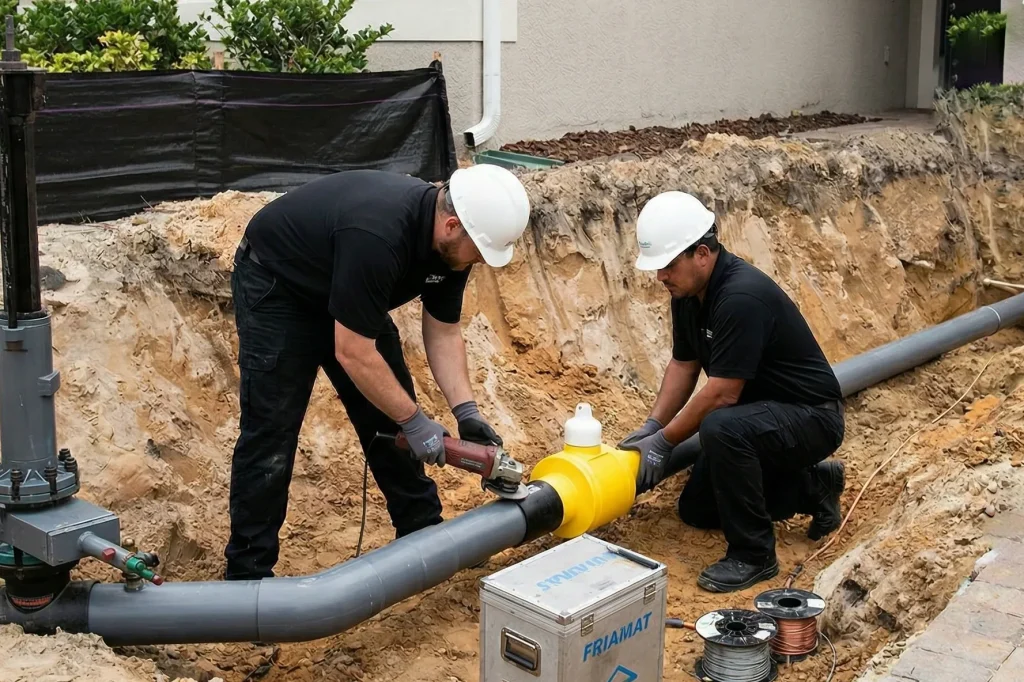
Some sewer lines are too damaged, too collapsed, or too shallow for trenchless methods. In those cases, we excavate a trench along the pipe route and replace the line section by section. Open-trench replacement gives us direct access to inspect soil conditions, correct grade issues, and address bellied sections that trenchless methods cannot fix.
We restore landscaping disturbance as part of the project. Concrete, asphalt, and hardscape removal and replacement are included in the scope when needed.
Sewer Camera Inspection
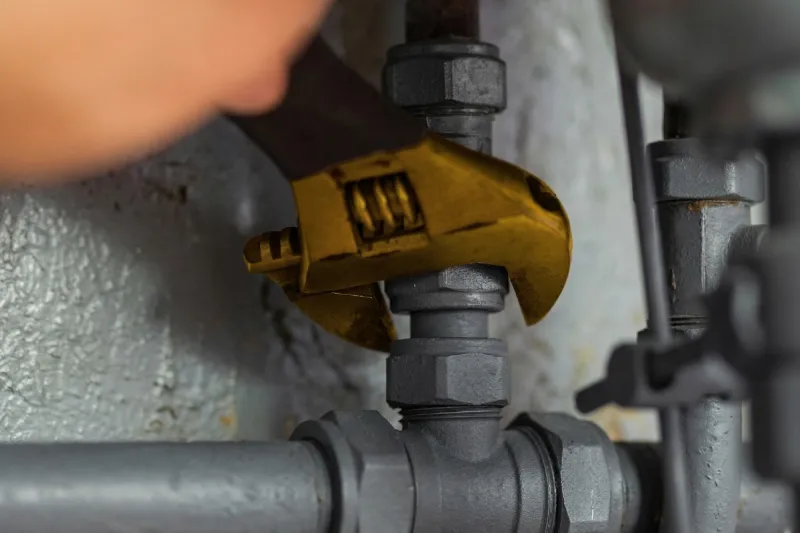
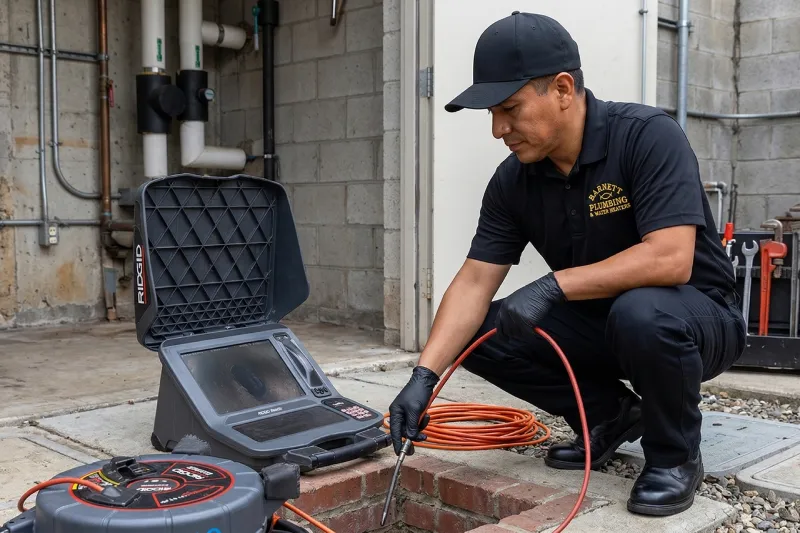
Before recommending any work, we run a high-definition sewer camera through the line. The camera shows us exactly where the damage is, what type of pipe you have, and how severe the problem is. This inspection drives the recommendation for trenchless or open-trench repair.
You see the footage in real time. We walk you through what the camera reveals so you understand the condition of your sewer line before making any decisions.
Frequently Asked Questions About Sewer Line Repair
How much does sewer line replacement cost?
Residential sewer line replacement in the Tri-Valley typically ranges from $15,000 to $30,000. The final cost depends on the length of the lateral, depth of the pipe, method used (trenchless vs. open-trench), and any hardscape that needs to be removed and replaced.
How long does a sewer line replacement take?
Most residential sewer replacements are completed in one to three days. Trenchless methods are often faster. Projects requiring significant excavation or city permit coordination may take slightly longer.
Can trenchless methods work on any sewer line?
Not always. Trenchless works well when the existing pipe has a clear path and is not fully collapsed or severely bellied. We determine the right method after running a sewer camera inspection. If trenchless is not a fit, we explain why and present the open-trench option.
Is the sewer lateral my responsibility or the city's?
In most Tri-Valley cities, the homeowner is responsible for the sewer lateral from the house to the city connection at the main. The city maintains the main sewer line itself. We handle the homeowner’s portion of the lateral.
What causes sewer lines to fail?
The most common causes are tree root intrusion, pipe material degradation (especially clay and cast iron), ground shifting, and age. Homes built before the 1980s often have clay sewer laterals that crack and separate at the joints over time.
Do you pull permits for sewer work?
Yes. Sewer line replacement requires permits in all Tri-Valley jurisdictions. We handle the permit application, inspections, and final sign-off as part of the project. CSLB License #910529.