
Local Plumbing Contractor in Lafayette, CA
Local Plumber for Lafayette's Mid-Century Homes and Hillside Properties
Your 1960s ranch home has low water pressure that gets worse every year. The cast iron drain under the kitchen has been slow for months. The water heater in the garage is 15 years old and making sounds you have never heard before. These are the calls we get from Lafayette homeowners every week.
Barnett Plumbing & Water Heaters has served Lafayette homes for over 20 years. Our nearest office is in Pleasanton at 4713 First Street, Suite 242, about 20 minutes from most Lafayette neighborhoods via Highway 24 and I-680. Call (925) 294-0171 and a Barnett plumber will be on the way.
Full-Service Residential Plumbing for Lafayette Homes
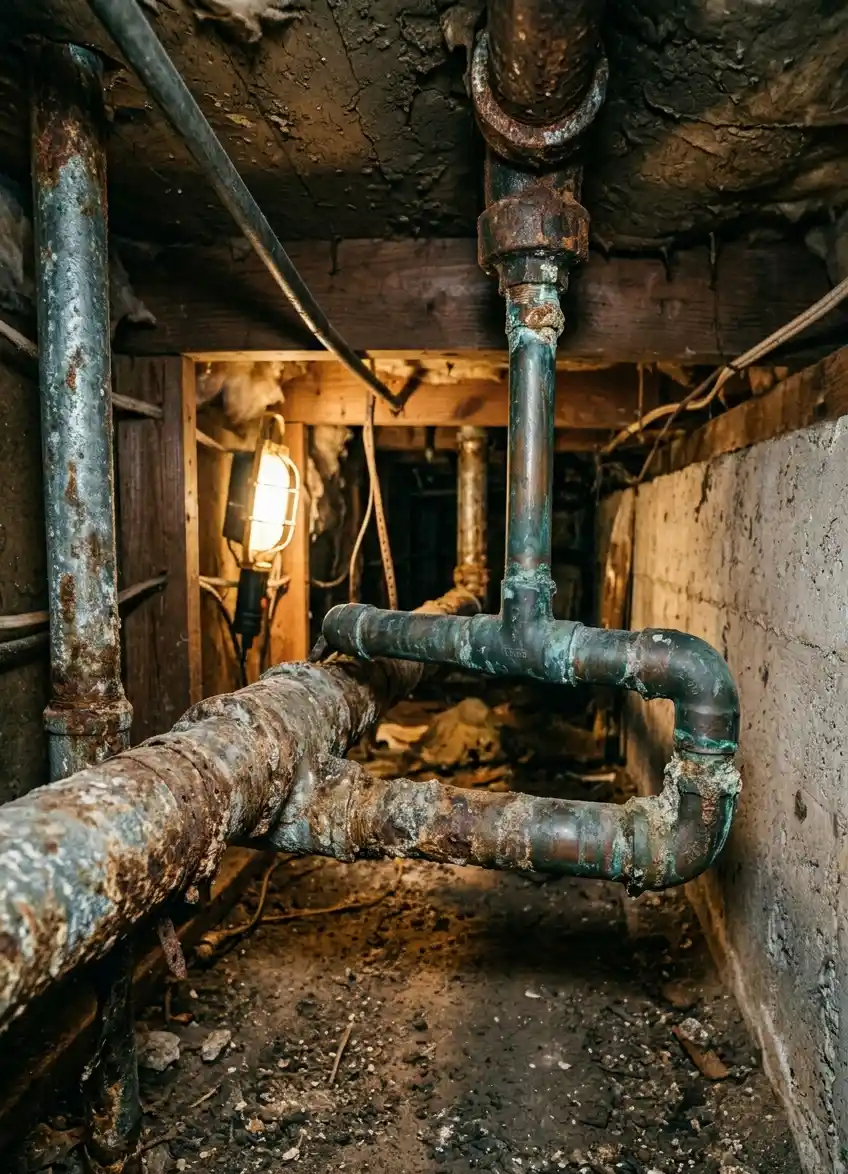
Roughly 60 percent of Lafayette’s housing stock was built between 1950 and 1970 during the postwar suburban boom that tripled the town’s population from about 5,000 to over 15,000 in just 15 years. That means most homes here are running on plumbing systems that are 55 to 75 years old. Galvanized steel supply lines, cast iron drain pipes, and original copper fittings were standard for the era, and all three materials have reached or passed their expected service life.
Every job follows California Plumbing Code (CPC) standards. We pull all required permits through the City of Lafayette Building Division, coordinate inspections, and guarantee our work.
With average home values around $2.2 million, Lafayette homeowners need plumbing work done right the first time. A botched repair in a mid-century home with plaster walls and original hardwood floors creates damage that costs far more than the plumbing itself. We plan every job to minimize disruption and protect the finishes around it.
Water Heater Services
Plumbing Services
Tell Us What's Going On. We'll Handle It.
How Lafayette's Geography and Geology Affect Your Plumbing
Heavy Clay Soils
Hayward Fault Proximity
Las Trampas Creek and High Water Table
EBMUD Pressure Zones and Hillside Pumping
Neighborhood-Specific Plumbing Challenges Across Lafayette
Lafayette’s neighborhoods were built in distinct waves from the 1930s through the 2000s. The decade your home was built determines what pipe materials are inside your walls, under your slab, and running out to the sewer main. Here is what we see in each major area.
Happy Valley
Most Affluent / North of Hwy 24 / Large Estates / Low Water Pressure
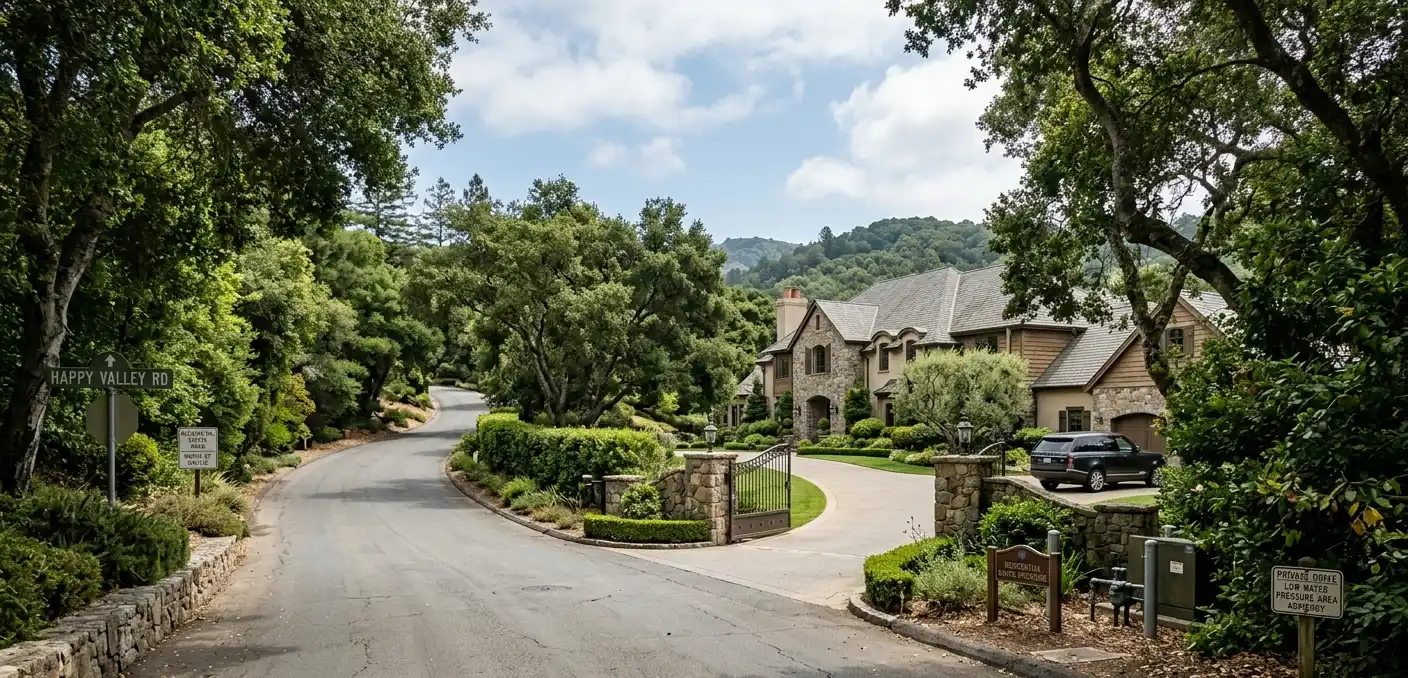
Lafayette’s premier residential area with large hillside estates on multi-acre lots. The elevated terrain puts Happy Valley homes in EBMUD’s pumped pressure zones, and low water pressure is a chronic complaint here. Many properties require booster pumps to maintain adequate flow to upper floors. Long supply runs from the street to the house on oversized lots add friction loss that compounds the pressure problem. Original copper lines on older estates show pinhole leaks at elbows where decades of turbulent flow have thinned the pipe walls.
Burton Valley
1937-2016 Mix / Ranch & Traditional / Former Orchard Land / Moderate Pressure
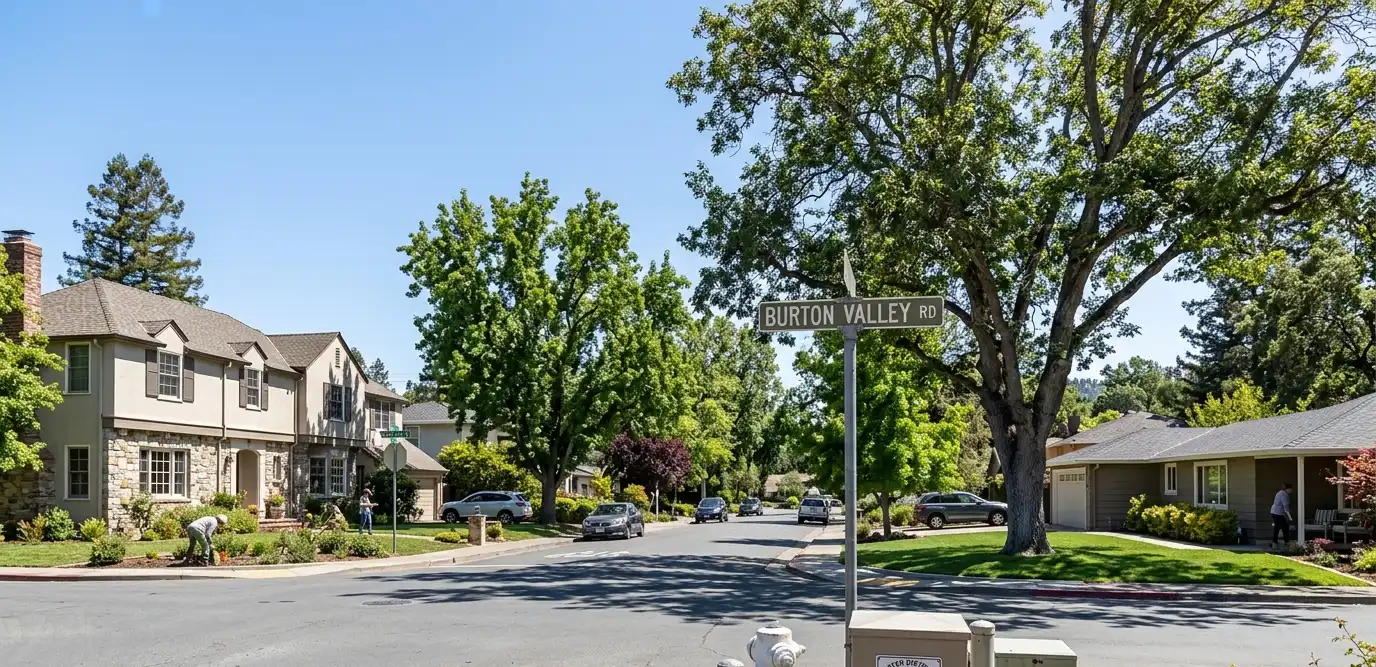
Burton Valley’s housing spans nearly 80 years, from pre-war farmhouses to recent custom builds on subdivided lots. The area was originally pear and walnut orchards, and mature trees from that era still send roots toward sewer laterals and drain lines. Older homes here run galvanized supply lines and cast iron drains. Mid-century ranch homes with slab-on-grade foundations make under-slab sewer repairs more involved because the concrete must be cut and patched. Pressure is moderate at this elevation.
The Trails & Downtown Flats
1950s-1960s / Single-Story Bungalows / Lower Elevation / Original Galvanized & Cast Iron
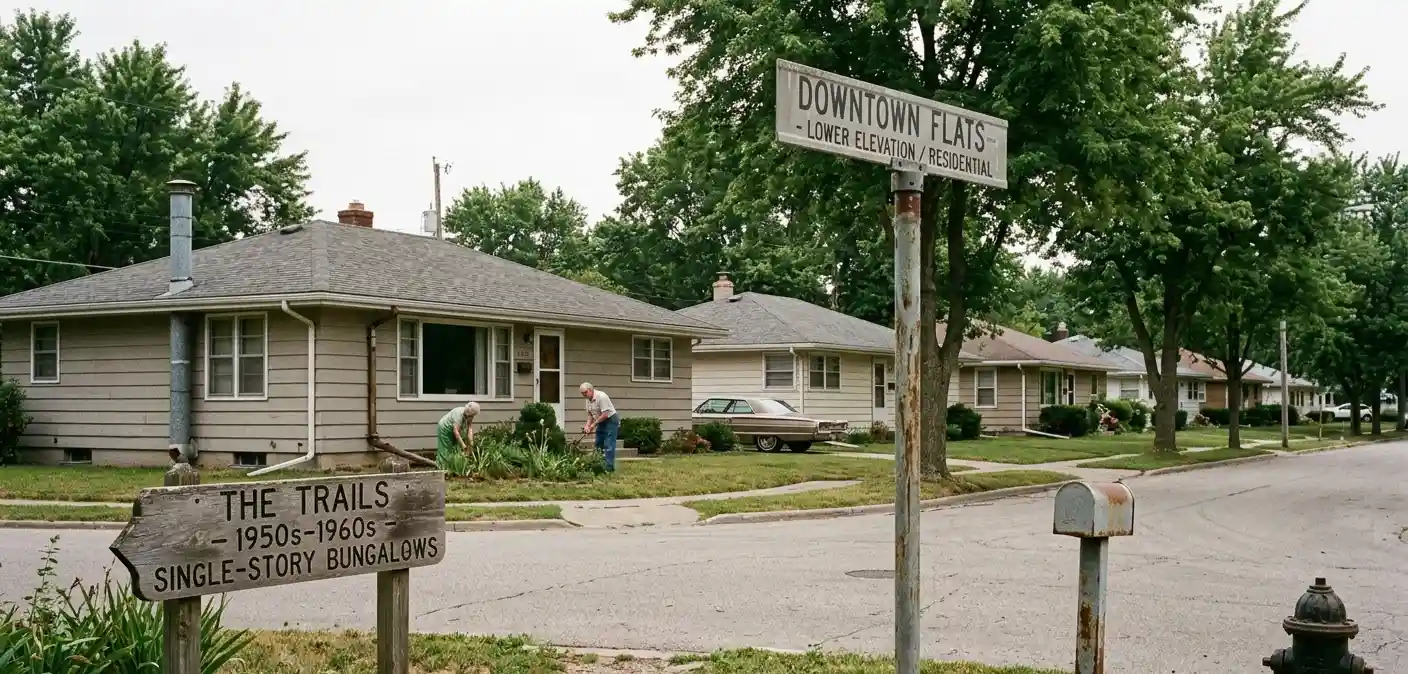
The core of Lafayette’s mid-century building boom. These single-story homes on smaller lots sit at lower elevation near downtown, which means better water pressure than hillside areas. The tradeoff is age. Most of these homes still have original galvanized steel supply lines that are corroded, restricted, and pushing rust-colored water through the taps. Cast iron drain pipes under and around these homes have had 65 to 75 years of corrosion and root exposure. Full repiping and sewer lateral replacement are common jobs in this area.
Reliez Valley
Pre-War Farmhouses + Mid-Century / Rural Character / High Water Table / Drainage Issues
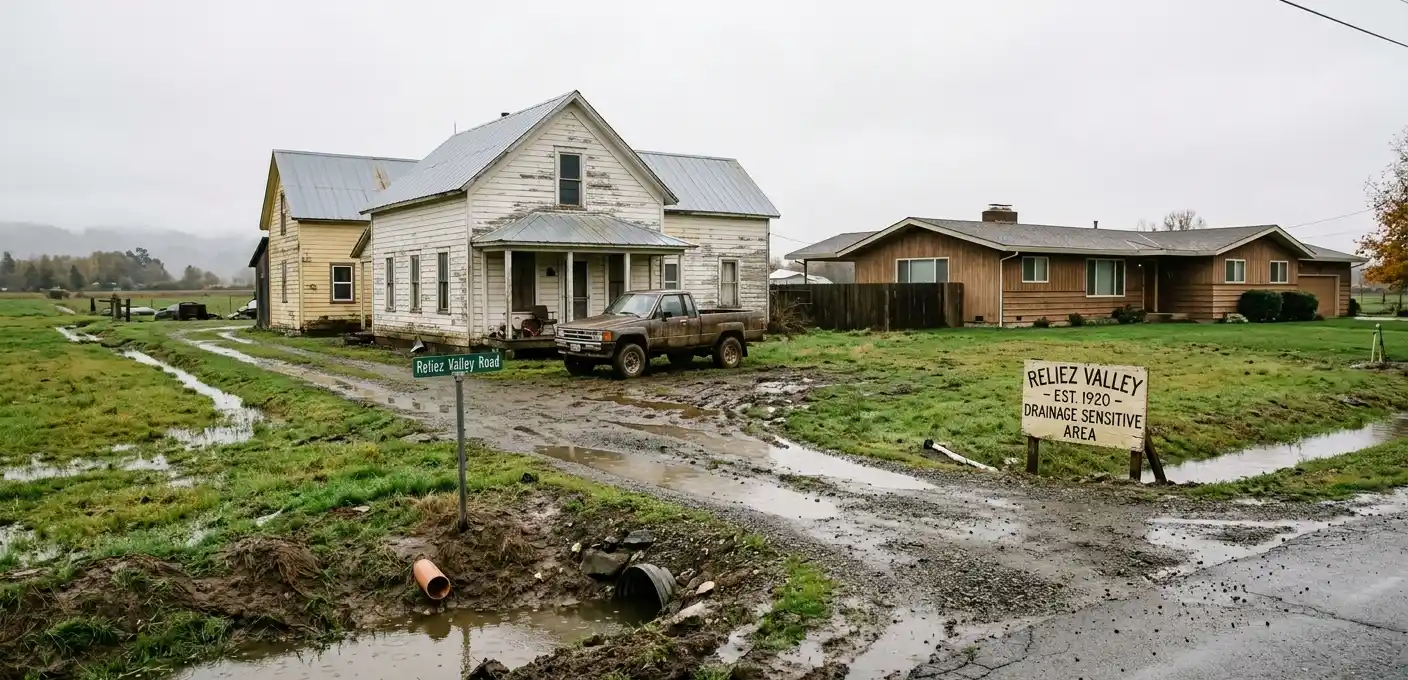
Reliez Valley retains a semi-rural feel with a mix of original farmhouses and 1950s-1960s subdivisions. Reliez Creek runs through the area, and the high water table creates persistent drainage challenges for homes near the creek bed. Crawl spaces stay damp, sewer laterals sit in saturated soil that accelerates joint deterioration, and backflow risk increases during storm events. Pre-war homes in this area sometimes have plumbing configurations that predate modern code and require creative solutions during repairs.
Lafayette Valley Estates & Lafayette Heights
1954+ / ~200 Prefab National Homes / Original Galvanized & Cast Iron / Higher Failure Risk
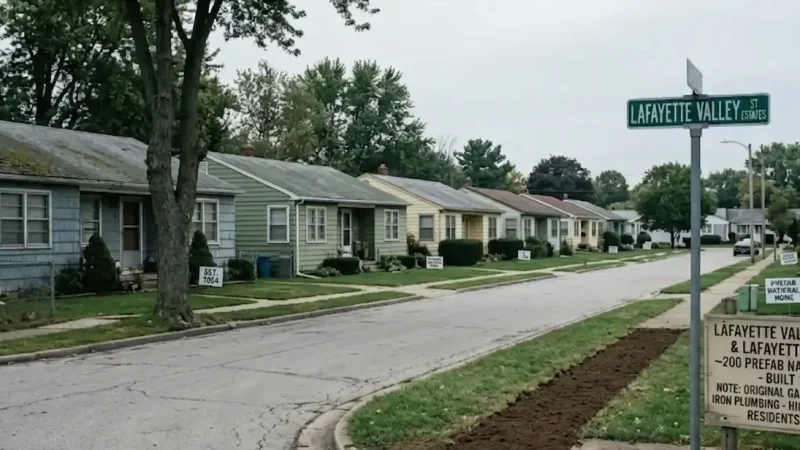
Starting around 1954, approximately 200 mass-produced National Homes prefab houses were built in Lafayette Valley Estates and Lafayette Heights. These homes were constructed quickly using standardized materials and methods. The original galvanized steel supply lines and cast iron drain pipes in these homes share the same age, the same materials, and the same failure patterns. When one home in the neighborhood has a pipe failure, it is a reliable indicator that similar homes nearby are on the same timeline. Proactive inspection saves these homeowners from emergency flooding.
Acalanes Ridge & Springhill
1960s-2000s / Hillside Estates / Larger Lots / Pressure Management Required
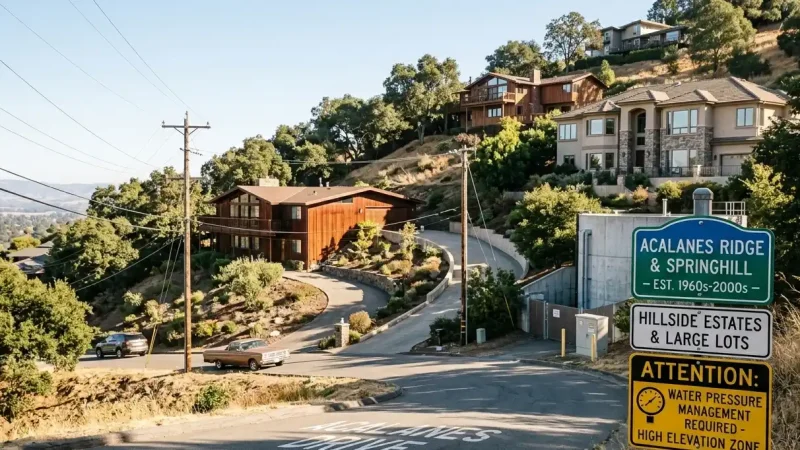
Hillside communities with homes built across four decades. Elevation drives the main plumbing challenge here: EBMUD pumped zones create pressure variation that stresses supply piping and fixture connections. Larger homes on these lots run longer pipe runs, more fixtures, and higher hot water demand. Clay soil on hillside grades shifts more aggressively than on flat ground, putting extra stress on buried sewer laterals. Homes from the 1960s and 1970s in these areas are strong candidates for whole-house repiping.
Pipe Material Lifespan Timeline
Galvanized Steel: 30-50 years. Expired for any home built before 1980. The dominant supply line material in Lafayette’s mid-century homes.
Cast Iron: 50-75 years. Expired for pre-1970s drain and sewer lines. Root infiltration and internal corrosion are the primary failure modes.
Copper: 50-70 years. Approaching end of life for 1950s and 1960s homes. Pinhole leaks at elbows are the early warning sign.
PEX: 40-50+ years. Newer material used in renovations. Flexible enough to handle ground movement better than rigid alternatives.
Clay Sewer Pipe: 50-60 years. Common in pre-1970s Lafayette homes. Brittle, root-prone, and often cracked at joints from soil movement.
Not Sure What's Wrong? Describe It. We'll Figure It Out.
Mid-Century Plumbing in Lafayette: What 60-Year-Old Pipes Look Like
Galvanized Steel Supply Lines
Cast Iron Drain Pipes
Original Copper at Elbows and Tees
Clay Soil and Creek Proximity: How Lafayette's Ground Affects Your Pipes
The Expansion Cycle
Hydrostatic Pressure Near Creeks
What This Means for Homeowners
Describe Your Problem. We'll Call You Back Today.
Lafayette Plumbing Permits, Codes, and Sewer Lateral Responsibility
The City of Lafayette Building Division requires permits for any plumbing work that involves replacing concealed pipes, including drain lines, water supply lines, soil pipes, waste lines, and vent pipes. That covers water heater replacement, whole-house repiping, sewer line replacement, new gas line installation, and any connection to the city water or sewer main.
Minor repairs like fixing a leaking faucet, clearing a drain stoppage, or replacing a toilet flapper do not require a permit. But anything that changes the layout or replaces a section of concealed piping does.
Sewer Lateral Ownership
Lafayette’s sewer service is provided by the Central Contra Costa Sanitary District (Central San). Under Central San rules, the property owner is responsible for the entire sewer lateral from the house all the way to the connection at the sewer main in the street. That includes the portion under the sidewalk and the public right-of-way. There is no mandatory point-of-sale sewer lateral inspection in Lafayette, but we recommend a camera inspection before buying or selling any home built before 1980.
Central San is currently running the Lafayette Sewer Renovation Project, replacing approximately 1.8 miles of aging public sewer lines. That project addresses the mains, but the private laterals connecting each home to those mains remain the homeowner’s responsibility. If the main in your street is being replaced, it is a good time to inspect and repair your lateral while the street is already open.
Permits and Process
Why Lafayette Homeowners Choose Barnett Plumbing & Water Heaters
Over 900 families across the Tri-Valley and Lamorinda area have left us five-star reviews. We’ve held CA Contractor License #910529 (C-36 Plumbing, C-16 Fire Protection) since 2005. We carry full general liability coverage, workers’ compensation through Benchmark Insurance Company, and a $15,000 bond through American Contractors Indemnity Company.
Our closest office to Lafayette is at 4713 First Street, Suite 242, Pleasanton, CA 94566, about 20 minutes from most Lafayette neighborhoods via Highway 24 and I-680. We stock American Standard, Rheem, and Bradford White equipment on our trucks through Tri-Valley distributors, so parts and warranty support stay local.
Lafayette’s mid-century homes need plumbers who understand old pipe materials, clay soil conditions, and the quirks of working in houses with plaster walls, original hardwood floors, and limited crawl space access. That is the work we do every day across the Tri-Valley and Lamorinda.
Call (925) 294-0171 to schedule service.