
The Real Cost of Installing a Water Heater Yourself
Replacing a water heater looks straightforward on YouTube. Drain the old tank, disconnect a few fittings, connect the new one, fill it up. A weekend project. Save a thousand bucks. The videos make it look like changing a tire.
What those videos skip is everything that makes a water heater installation safe and legal. Gas connections that leak. Venting that backdrafts carbon monoxide into your home. Electrical work without a permit that voids your homeowner’s insurance. The gap between a YouTube tutorial and a code-compliant installation is where problems live.
What a Water Heater Installation Actually Involves
A water heater connects to at least three systems in your home: water supply, energy source (gas line or electrical circuit), and exhaust venting (for gas units). Each system has code requirements that exist because people have been injured or killed when those requirements weren’t met.
The Consumer Product Safety Commission reports that fuel-burning appliances, including water heaters, contribute to over 100 carbon monoxide poisoning deaths per year in the United States. Improper venting is a leading cause. A flue pipe with the wrong diameter, slope, or connection to the chimney can pull combustion gases into living spaces instead of pushing them outside.
Beyond safety, there’s the permit question. California requires a permit for water heater replacement in virtually every jurisdiction. The permit triggers an inspection that verifies the installation meets the California Plumbing Code and mechanical code. Skip the permit, and you risk a fine, a failed home sale inspection down the road, and an insurance company that denies a claim because the work was unpermitted.
Where DIY Water Heater Installs Go Wrong
The most common DIY mistakes aren’t the dramatic ones. They’re the quiet failures that cause problems weeks or months later.
Temperature and pressure relief valve errors. The T&P valve is the water heater’s primary safety device. It opens if tank pressure exceeds 150 PSI or temperature exceeds 210 degrees Fahrenheit, preventing the tank from becoming a pressure vessel. Homeowners who install the valve without a proper discharge pipe, or who reuse an old valve on a new tank, create a situation where the safety device can’t do its job. T&P valves must discharge to within 6 inches of the floor or to the outside, using rigid pipe that doesn’t reduce in diameter.
Improper gas connections. Flexible gas connectors have a lifespan. Reusing an old connector on a new water heater saves $15 and risks a gas leak. The connector may have micro-cracks from years of thermal cycling that aren’t visible to the eye. New installations should always use a new gas connector, new shut-off valve, and a drip leg (sediment trap) on the gas line.
Expansion tank omission. California plumbing code requires a thermal expansion tank on any closed plumbing system, which includes most homes with a backflow preventer or check valve at the meter. Without one, heated water expands inside a sealed system, and that pressure has to go somewhere. It stresses fittings, causes the T&P valve to weep, and shortens the life of the new tank you just installed.
Seismic strapping. California requires earthquake straps on all water heaters. Two straps, one in the upper third and one in the lower third of the tank, anchored to the wall studs. A 50-gallon water heater weighs over 400 pounds when full. In an earthquake, an unstrapped tank can topple, rupture the gas line, and start a fire.
What a Licensed Plumbing Team Handles That You Won’t See on YouTube
A licensed plumbing team doesn’t just swap boxes. The installation includes a full assessment of the existing setup and upgrades to bring everything up to current code.
That means checking the gas line size to make sure it can supply the new unit’s BTU demand. It means verifying the venting diameter and draft. It means testing the water pressure and installing a pressure-reducing valve if the supply exceeds 80 PSI. It means installing the expansion tank, the seismic straps, the new gas connector, and the proper T&P discharge pipe.
A professional installation also comes with a permit and inspection. That paper trail protects you when you sell the house, file an insurance claim, or need warranty service from the manufacturer. Most water heater warranties require professional installation. Read the fine print on any warranty before deciding to install the unit yourself.
The Math on DIY Savings
The typical argument for DIY is saving on labor, which runs $500 to $1,500 depending on the complexity and your location. But that calculation only works if everything goes right the first time and you don’t need to call a plumber afterward to fix what you missed.
Here’s what a DIY install actually costs when you add up the parts most people forget:
- Permit and inspection fee: $75 to $200 (if you pull one, which you should)
- New gas connector, shut-off valve, drip leg: $30 to $50
- Expansion tank: $40 to $80
- T&P discharge pipe and fittings: $20 to $40
- Seismic strapping kit: $15 to $30
- Venting materials (if upgrading): $50 to $150
- Tools you may not own (pipe wrench, tubing cutter, Teflon tape, pipe dope): $50 to $100
- Disposal of the old unit: $25 to $75
Add those up and the parts alone run $300 to $700. The actual labor savings shrinks to a few hundred dollars, and that’s before accounting for a full day of your time, the risk of a gas leak, and the possibility that the inspector flags something you’ll need a plumber to fix anyway.
When DIY Might Make Sense
A like-for-like replacement of an electric tank water heater in an accessible location is the simplest scenario. No gas connections to worry about, no venting, and the electrical work is limited to disconnecting and reconnecting wires at a junction box. If you’re comfortable with basic plumbing and electrical work, have done it before, and plan to pull the permit, an electric tank swap is the one case where DIY can work.
Anything involving gas, tankless conversions, heat pump installations, or moving the unit to a different location should be left to a professional. The complexity jumps significantly, the safety stakes are higher, and the code requirements are stricter.
Getting It Done Right
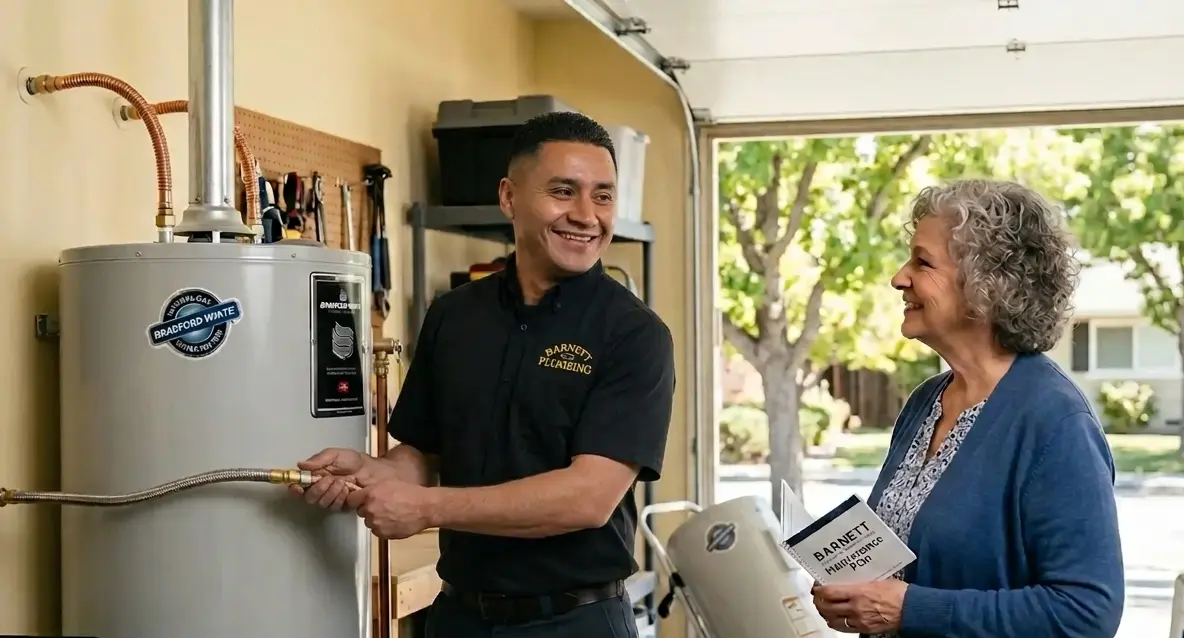
A professional water heater installation from Barnett Plumbing includes the permit, the inspection, all code-required upgrades, and the disposal of your old unit. Most standard installations are completed the same day. Call (925) 294-0171 or schedule online for a quote.