
Find Your Water Shut-Off Valve Before You Need It
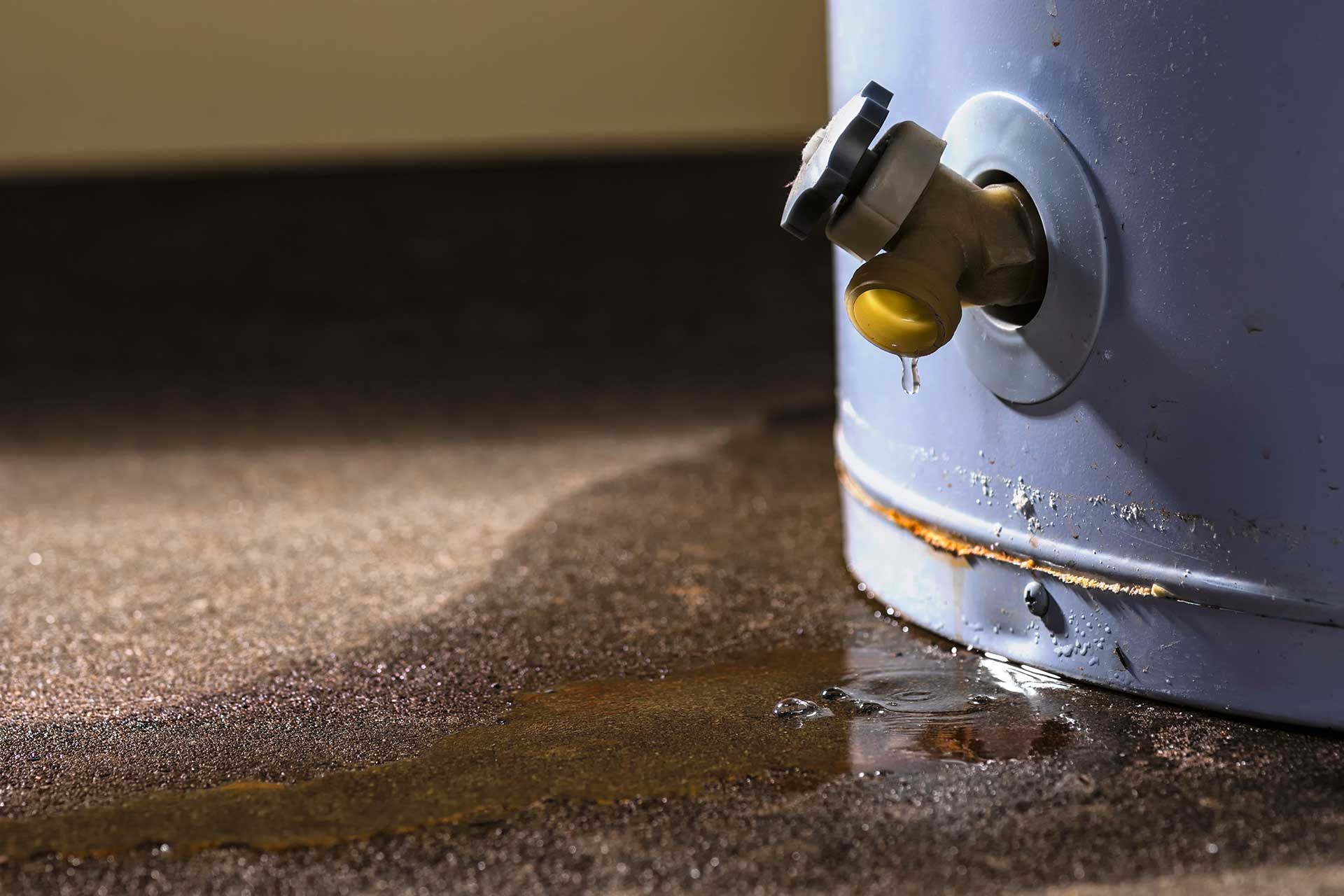
A burst pipe sends 4 to 8 gallons of water per minute across your floor. A failed washing machine hose dumps water at a similar rate. A water heater that ruptures can release 40 to 50 gallons in minutes. In every one of these scenarios, the single most useful thing you can do is turn off the water supply to your home. And you have about 60 seconds to do it before the damage goes from “grab some towels” to “call your insurance company.”
The Insurance Information Institute reports that water damage and freezing claims average over $12,500 per incident, making water damage the second most common homeowner insurance claim after wind and hail. Most of that damage is preventable if someone in the household knows where the main shut-off valve is and can reach it quickly.
Where to Find the Main Water Shut-Off Valve
Every home has a main shut-off valve that controls all water flow into the building. The location depends on the age of the home, the region, and the builder’s preferences.
In the Tri-Valley and most of the Bay Area, the main shut-off is typically in one of these locations:
- Front of the house, near the hose bib, at the point where the main water line enters the building. Look for a valve on the pipe coming through the wall or foundation, usually within 3 to 5 feet of the front exterior wall.
- Garage, along the front or side wall. In many newer California homes, the main line enters through the garage slab and the shut-off valve is mounted on the pipe just inside the wall.
- Near the water heater, especially in homes where the main line routes to the water heater first before distributing to the rest of the house.
- In a utility box at the street, also called a meter box. This is the utility company’s shut-off and is a backup option if you can’t find or operate the valve inside the house. You’ll need a meter key (a T-shaped tool available at hardware stores for $10) to turn it.
Walk your home and find the valve right now, before you need it. If you can’t locate it, a plumber can identify it during any service visit.
Types of Shut-Off Valves
Knowing the type matters because each type operates differently, and some types are more prone to failure than others.
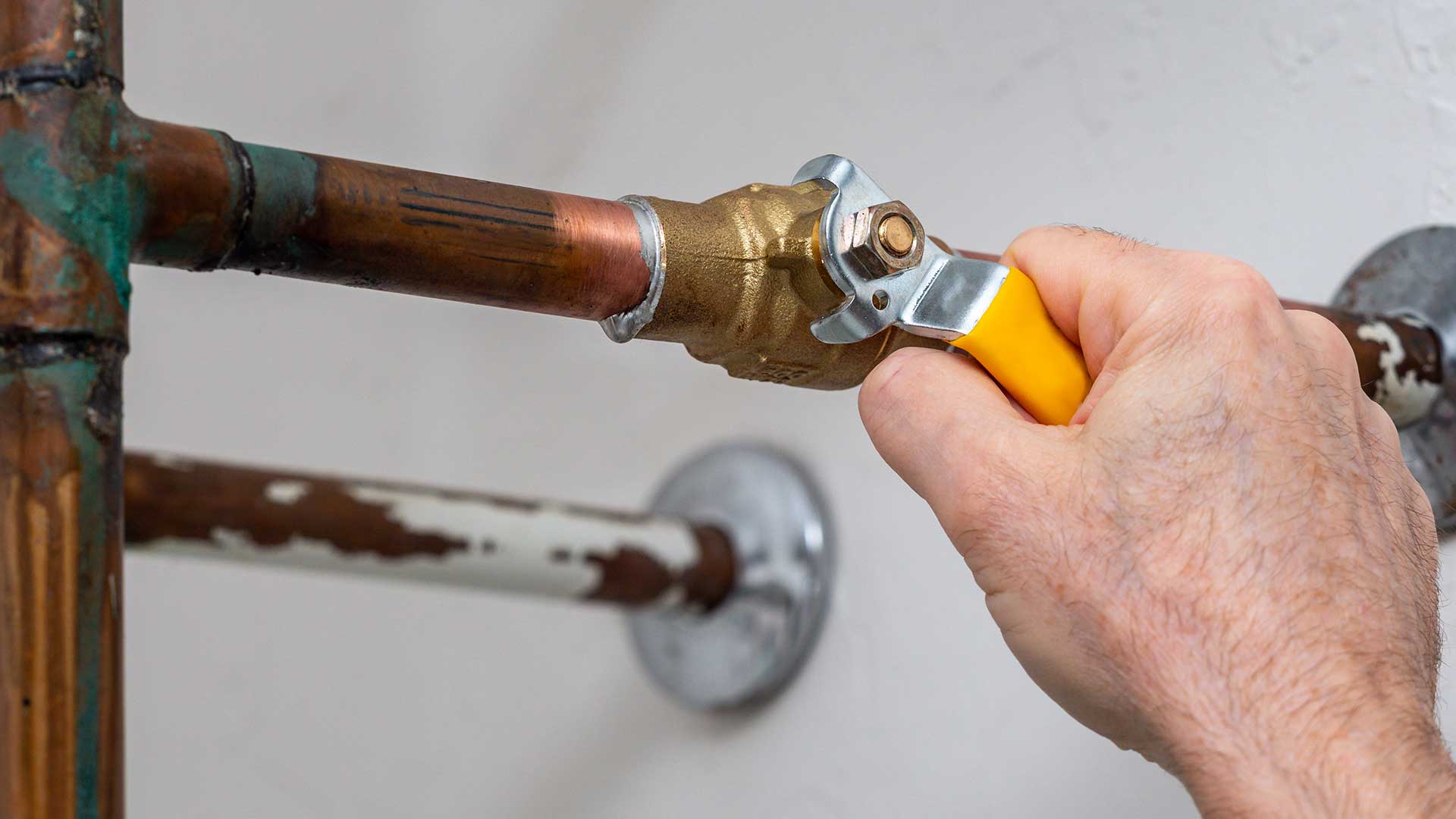
Ball valve (lever handle). This is the modern standard. A quarter turn of the lever (90 degrees) opens or closes the valve fully. When the lever is parallel to the pipe, the valve is open. Perpendicular means closed. Ball valves are the most reliable residential shut-off valve. They use a solid metal ball with a hole through the center. Turn the ball, the hole aligns with the pipe, water flows. Turn it 90 degrees, the solid wall of the ball blocks the pipe. Simple, fast, and unlikely to seize.
Gate valve (round handle). Common in homes built before the 1990s. You turn the round handle clockwise to lower a metal gate that blocks the water flow. Gate valves require multiple full turns to close (5 to 10 turns typically). They corrode over time, and the gate can seize in a partially open or partially closed position. A gate valve that hasn’t been operated in years may not turn at all, or it may break when forced.
Globe valve (round handle, different internal design). Less common in residential main lines but found on some older installations. Similar operation to a gate valve but with a different internal mechanism that provides better flow regulation. Also prone to corrosion and seizing.
If your home has a gate valve or globe valve as the main shut-off, consider having it replaced with a ball valve during your next plumbing service visit. The upgrade costs $200 to $400 and gives you a shut-off valve you can trust to work when you need it most.
How to Test Your Shut-Off Valve
A shut-off valve that hasn’t been operated in 5 or 10 years may not work when you need it. Test it once a year.
For ball valves: Turn the lever perpendicular to the pipe. Go inside and open a faucet. Water should stop within 10 to 15 seconds. If water keeps flowing (even a trickle), the ball seal is worn and the valve needs replacement.
For gate valves: Turn the handle clockwise until it stops. Don’t force it. If it won’t turn, don’t use a wrench. A corroded gate valve forced with a wrench can crack or break the handle off, leaving you with no shut-off at all. If the valve is stuck, note it as a repair to address proactively, not during an emergency.
After testing, return the valve to the fully open position. For gate valves, open fully and then turn back a quarter turn. This prevents the handle from seizing in the open position.
Individual Fixture Shut-Off Valves
You don’t always need to shut off the entire house. Individual shut-off valves, called fixture stops or angle stops, are located under sinks, behind toilets, and behind washing machines. These control water to a single fixture.
If a toilet is overflowing, turn the oval handle behind the toilet clockwise. If a sink supply hose bursts, turn the valves under the sink. If the water heater is leaking, there’s a valve on the cold water inlet pipe above the tank.
Fixture stops are the first line of defense. The main shut-off is the backup when the fixture stop doesn’t work or when the source of the water isn’t immediately obvious.
Smart Water Shut-Off Systems
Automatic water shut-off systems have become increasingly popular in California, especially in homes with high-value finished spaces below grade or with a history of water damage. These systems use a motorized ball valve on the main water line combined with leak sensors placed throughout the house.
When a sensor detects water where it shouldn’t be (under the water heater, behind the washing machine, under the kitchen sink), the system automatically closes the main valve and sends an alert to your phone. Response time is typically 5 to 10 seconds from detection to shut-off, far faster than any human could react.
Installed cost ranges from $800 to $2,000 depending on the system and the number of sensors. Some homeowner insurance companies offer premium discounts for homes with automatic shut-off systems, which can offset a portion of the cost over time.
Emergency Steps When Water Is Flowing
If you discover an active leak or burst pipe, here’s the sequence:
- Turn off the main water shut-off valve. Don’t try to identify the source first. Stop the water, then investigate.
- Turn off the water heater. If the leak drained the hot water system, the heating element or gas burner could overheat. For electric units, flip the breaker. For gas units, turn the gas valve to “Off.”
- Open faucets to drain the remaining water. This relieves pressure in the pipes and reduces the amount of water that can escape from the damaged point.
- Document the damage with photos before cleanup. Your insurance adjuster will need this.
- Call a plumber to repair the source. Call your insurance company to start the claim.
The faster you shut off the water, the less damage you take. Knowing where the valve is and having practiced turning it buys you the 30 seconds that matter most.
Questions about your home’s shut-off valves, or want to upgrade a corroded gate valve to a reliable ball valve? Contact Barnett Plumbing and Water Heaters or call (925) 294-0171.