
When Your Pilot Light Goes Out, Start Here
You step into the shower and the water never warms up. You check the water heater and the burner isn’t firing. On most gas water heaters, that means the pilot light has gone out. It’s one of the most common water heater issues, and in many cases, you can fix it yourself in under five minutes.
But before you grab a lighter, understand what you’re working with. A pilot light is a small, continuously burning flame that ignites the main burner whenever the thermostat calls for heat. Modern water heaters use a piezoelectric igniter (a push-button or spark mechanism) instead of a match. The process is safe when you follow the manufacturer’s instructions. It becomes unsafe when you skip steps or ignore the smell of gas.
Before You Relight: The Gas Smell Check
This step is not optional. Before touching anything on the water heater, get down near the floor and sniff for the smell of natural gas. Gas is heavier than air, so it pools at ground level. The odorant added to natural gas (mercaptan) smells like rotten eggs.
If you smell gas, do not attempt to relight the pilot. Do not flip any light switches. Do not use your phone near the water heater. Leave the house, take everyone with you, and call your gas utility’s emergency line from outside. The Consumer Product Safety Commission emphasizes that even a small gas leak near an ignition source can cause an explosion.
If you don’t smell gas, proceed to relighting.
How to Relight a Gas Water Heater Pilot Light
The exact steps vary slightly by manufacturer, but the process follows the same pattern on virtually every gas tank water heater built in the last 30 years. The instructions are printed on a label on the front of the unit. Read them. Manufacturers know their own products better than YouTube does.
Here is the general process:
Turn the gas control knob to “Off.” Wait a full five minutes. This allows any residual gas in the combustion chamber to dissipate. Do not shorten this wait. Five minutes is not a suggestion.
Turn the knob to “Pilot.” On most models, you’ll need to press the knob down or press a separate pilot button while holding it in the pilot position. This manually opens the gas valve to the pilot tube only.
Ignite the pilot. While holding the knob or button down, press the piezoelectric igniter button repeatedly until you see a small blue flame at the pilot tube, visible through the sight glass at the bottom of the tank. If your water heater doesn’t have a built-in igniter (rare on newer models, common on older ones), use a long-reach lighter through the access opening. Never use a regular lighter or match with your face near the combustion chamber.
Hold the knob or button for 30 to 60 seconds. This heats the thermocouple, a safety sensor that sits in the pilot flame. The thermocouple generates a tiny electrical voltage when heated, which tells the gas valve that the pilot is lit and it’s safe to supply gas. If you release the knob too quickly, the thermocouple hasn’t heated enough and the pilot will go right back out.
Release and turn the knob to your desired temperature. The pilot should stay lit. You’ll hear the main burner fire within a few minutes as the thermostat calls for heat. Set the temperature to 120 degrees Fahrenheit, which the Department of Energy recommends as the optimal balance of comfort and safety.
The Pilot Keeps Going Out
Relighting a pilot once is normal. Wind, a brief gas supply interruption, or a fluke can extinguish it. A pilot that keeps going out after relighting has a mechanical problem.
Thermocouple failure is the most common cause. The thermocouple is a thin metal rod that sits directly in the pilot flame. Over years of continuous heating, it degrades and eventually can’t generate enough voltage to hold the gas valve open. Replacement costs $20 for the part and takes a plumber about 15 minutes. It’s the single most common water heater repair we perform.
Dirty pilot tube. The pilot orifice is a tiny opening that can clog with dust, spider webs, or corrosion. A partially blocked orifice produces a weak, yellow flame that can’t fully heat the thermocouple. The pilot lights but won’t stay lit. Cleaning the orifice requires removing the pilot assembly, which is a job for a technician.
Draft issues. A water heater installed in a garage, utility closet, or laundry room near an exterior door can experience drafts strong enough to blow out the pilot. If the pilot goes out every time someone opens the garage door, the unit either needs a draft shield or needs to be relocated.
Pilot Lights on Newer Water Heaters
Many water heaters manufactured after 2010 use electronic ignition instead of a standing pilot. These units don’t have a continuously burning flame. Instead, they use a hot surface igniter or a spark igniter that fires only when the thermostat calls for heat, similar to how a modern gas furnace works.
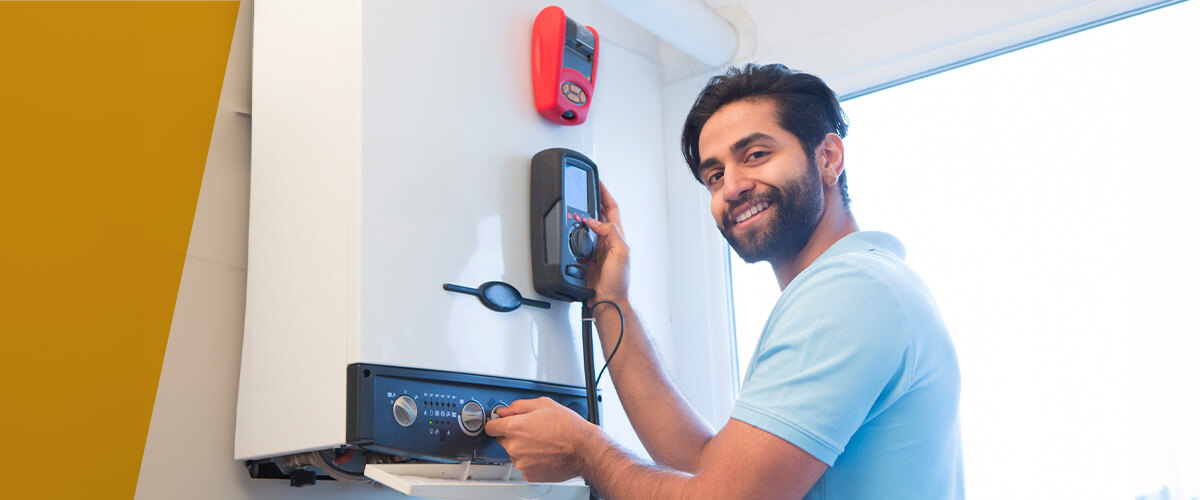
If your water heater has electronic ignition and the burner won’t fire, the troubleshooting is different. Check the status light on the gas valve. Most electronic ignition units have a diagnostic LED that blinks a fault code. The fault code chart is on the label or in the owner’s manual. Common codes indicate ignition failure, flame sensing failure, or a control board issue. These repairs require a technician.
When to Stop Troubleshooting and Call a Plumber
Relighting a pilot is a homeowner-level task. Diagnosing why it won’t stay lit is a technician-level task. Call a professional if:
- You smell gas at any point during the process
- The pilot won’t light at all after following the manufacturer’s instructions
- The pilot lights but goes out within seconds of releasing the knob, even after holding it for 60 seconds
- The pilot flame is yellow or orange instead of blue
- The status light on an electronic ignition unit is flashing a fault code
- The water heater is more than 10 years old and has never been professionally serviced
A water heater that’s struggling to keep its pilot lit often has other issues worth checking at the same time, including the anode rod, sediment buildup, and overall condition of the unit.
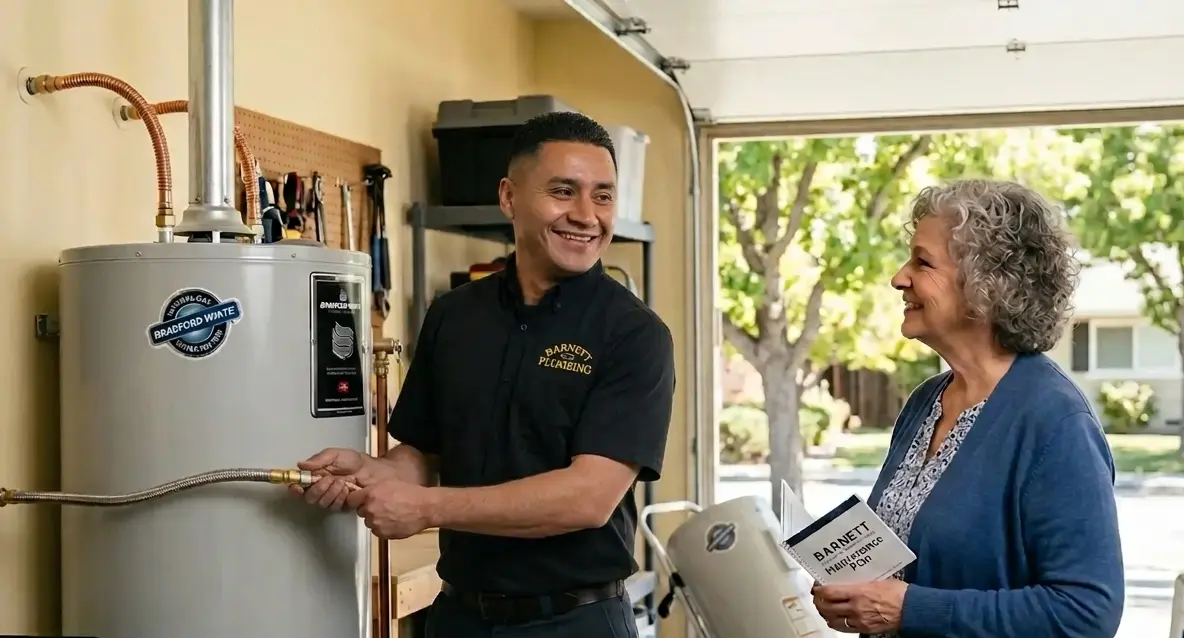
Need help with a water heater that won’t light? Contact Barnett Plumbing and Water Heaters or call (925) 294-0171. Same-day appointments available for most service calls.