
Two Electric Water Heaters. Very Different Technology.
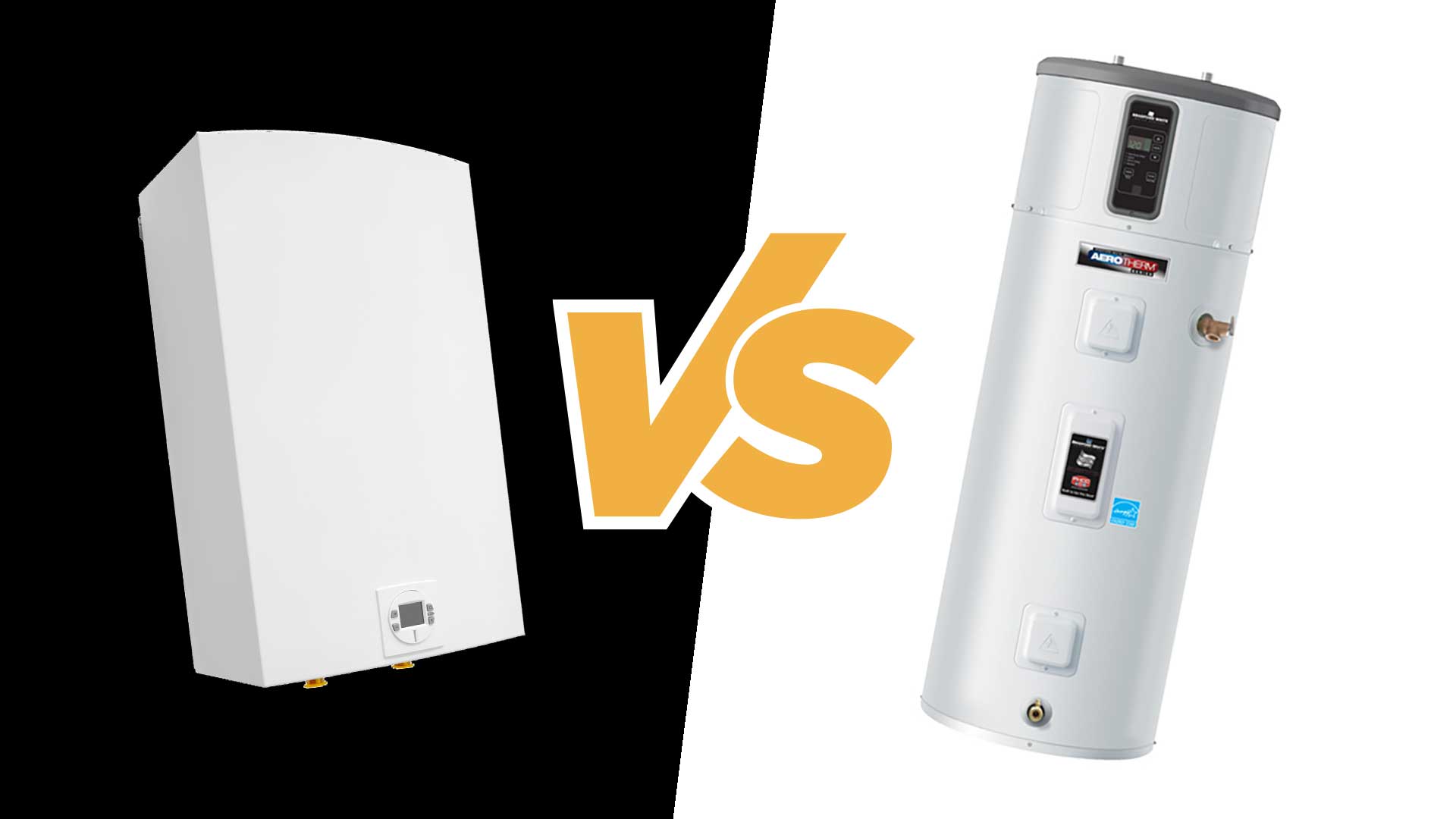
If you’re moving away from gas, either by choice or because California’s regulations are pushing you there, you’ve got two main options for electric water heating: tankless and heat pump. Both use electricity. Both eliminate combustion gases from your home. But they work in fundamentally different ways, cost different amounts to install and operate, and fit different homes and lifestyles.
This comparison breaks down how each technology works, what it costs, and which one makes more sense for a Tri-Valley home.
How Tankless Electric Water Heaters Work
A tankless electric water heater heats water on demand. Cold water flows through the unit, passes over high-powered electric heating elements, and comes out hot on the other side. No storage tank, no standby heat loss, no waiting for a tank to recover. You get hot water for as long as you need it, limited only by the unit’s flow rate capacity.
The trade-off is raw electrical demand. To heat water from cold to hot in the seconds it takes to pass through the unit, tankless electric heaters pull enormous amperage. A whole-house unit capable of serving multiple fixtures simultaneously typically requires 150 to 200 amps on a dedicated circuit. That’s often more than a home’s entire electrical panel can spare.
According to the U.S. Department of Energy, tankless water heaters are 24 to 34 percent more efficient than conventional storage tank models for homes that use 41 gallons or less of hot water per day. For homes using more than 86 gallons daily, the efficiency advantage drops to 8 to 14 percent.
How Heat Pump Water Heaters Work
A heat pump water heater doesn’t generate heat directly. It moves heat from the surrounding air into the water, using the same refrigeration cycle as an air conditioner but in reverse. A compressor circulates refrigerant through an evaporator coil that absorbs heat from the ambient air, then transfers that captured heat to the water in the tank.
Because it’s moving heat rather than creating it, a heat pump water heater uses roughly two to three times less electricity than a resistance electric heater for the same amount of hot water. The ENERGY STAR program rates certified heat pump water heaters with a Uniform Energy Factor (UEF) of 2.0 or higher, meaning they produce twice as much heat energy as the electrical energy they consume.
Heat pump water heaters do have a storage tank, typically 50 to 80 gallons. They also have backup electric resistance elements that kick in during high-demand periods or when the ambient air temperature drops too low for the heat pump to work efficiently.
Installation Requirements Compared
Electrical panel. This is the biggest practical difference. A heat pump water heater runs on a standard 30-amp, 240-volt circuit, the same type of circuit that powers your clothes dryer. Most homes already have this available or can add one for a few hundred dollars. A whole-house tankless electric unit needs a dedicated 150 to 200 amp circuit, which often requires a full panel upgrade costing $2,000 to $5,000.
Space. Tankless units mount on a wall and take up almost no floor space. Heat pump water heaters need a floor area similar to a standard tank water heater plus clearance for airflow. The heat pump unit requires at least 750 cubic feet of surrounding air space to draw heat from efficiently. A tight closet won’t work. A garage, utility room, or basement is ideal.
Venting. Neither type requires combustion venting since both are electric. However, heat pump water heaters need adequate airflow to the surrounding space. Installing one in a sealed room without ventilation starves the unit of the air it needs and reduces efficiency.
Climate considerations. Heat pump water heaters pull heat from ambient air. In the Tri-Valley, where garage temperatures rarely drop below 40 degrees even in winter, this works well year-round. In colder climates where ambient temperatures regularly drop below freezing, heat pump efficiency drops and the unit relies more heavily on its backup resistance elements, erasing some of the efficiency advantage.
Operating Costs
For a household using 55 gallons of hot water per day (the national average), here’s how the annual operating costs compare at California’s average residential electricity rate of roughly $0.30 per kWh:
- Standard electric tank: $700 to $900 per year
- Tankless electric: $500 to $650 per year
- Heat pump: $200 to $350 per year
The heat pump water heater’s operating cost advantage is significant. Over a 13-year lifespan, the energy savings alone can amount to $4,000 to $7,000 compared to a standard electric tank, and $2,000 to $4,000 compared to a tankless electric unit.
Upfront Costs
Equipment and installation costs before rebates and tax credits:
- Tankless electric (whole-house): $2,000 to $4,500 installed, potentially $6,000+ if a panel upgrade is needed
- Heat pump water heater: $2,500 to $4,500 installed, typically no panel upgrade required
After the federal tax credit (30% of installed cost, up to $2,000) and available California rebates, a heat pump water heater often nets out at $1,500 to $2,500 out of pocket. The tankless unit’s higher installation cost, especially when a panel upgrade is involved, makes its net cost less competitive. See our full breakdown of tax credits and rebates.
Performance and Daily Use
Hot water delivery. Tankless units provide unlimited hot water but at a limited flow rate. If you’re running a shower and a dishwasher simultaneously, a single tankless unit may struggle to keep up. Heat pump water heaters store 50 to 80 gallons of hot water and can deliver it at full pressure to multiple fixtures. They recover more slowly than a gas tank but handle normal household demand well.
Noise. Tankless units are nearly silent. Heat pump water heaters produce a low hum from the compressor, similar to a small refrigerator. In a garage, you’ll never notice it. In a closet next to a bedroom, you might.
Longevity. Tankless electric units can last 20 years or more with proper maintenance. Heat pump water heaters typically last 13 to 15 years. Both outlast a standard tank water heater’s 8 to 12 year lifespan.
Which One Fits Your Home
Choose a heat pump water heater if: You have a garage, basement, or utility room with adequate space and airflow. Your electrical panel can support a 30-amp circuit. You want the lowest possible operating cost and qualify for rebates and tax credits.
Choose tankless electric if: Floor space is extremely limited (condos, small homes). Your electrical panel can handle 150+ amps of additional load, or you’re already planning a panel upgrade for other reasons. You want unlimited hot water with zero recovery time.
For most Tri-Valley homes, the heat pump water heater is the stronger choice on total cost of ownership. The lower operating cost, simpler electrical requirements, and available financial incentives make the math hard to beat.
Need help deciding? Contact Barnett Plumbing and Water Heaters or call (925) 294-0171. We’ll assess your home’s layout, electrical capacity, and hot water usage to recommend the right fit.