
How Long You’ll Actually Be Without Hot Water
When your water heater dies, the first question is always “how fast can you get here?” The second question is “how long will the installation take?” The answers are different for every type of water heater, every home, and every situation.
Here’s a realistic breakdown of installation times based on what we see across hundreds of installations in the Tri-Valley every year. Not the marketing answer. The real one.
Standard Gas Tank Replacement: 2 to 4 Hours
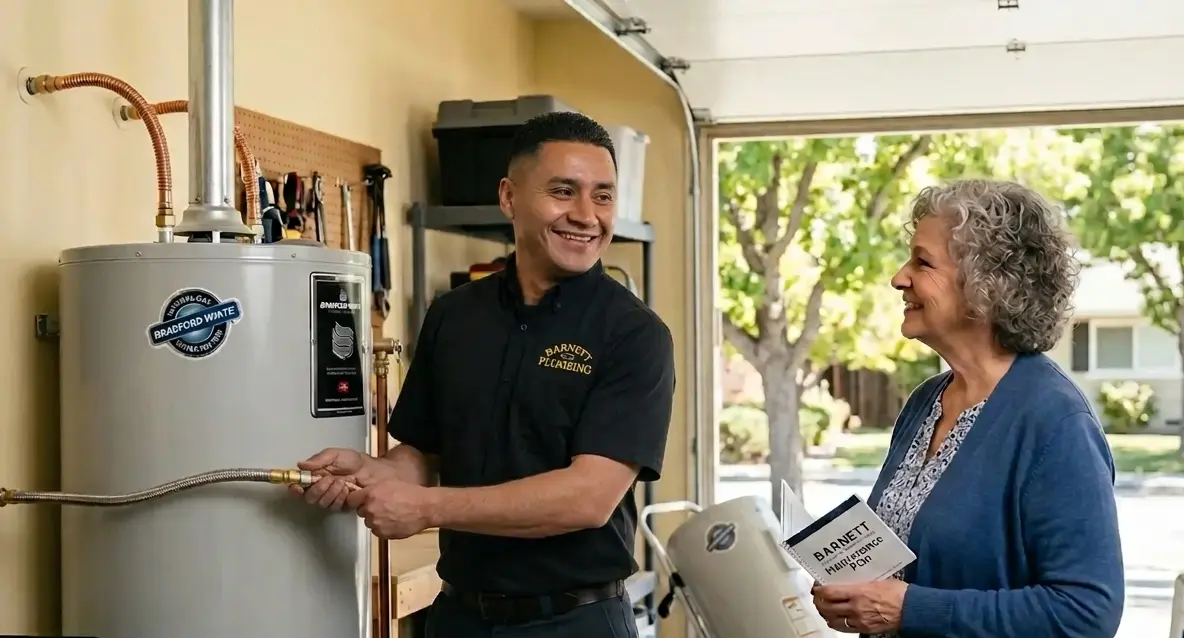
A like-for-like gas tank replacement, where the new unit goes in the same spot with the same type of connections, is the fastest installation. The process follows a predictable sequence: turn off gas and water, drain the old tank, disconnect and remove it, set the new tank, connect the water lines, connect the gas line with a new flexible connector, install the T&P relief valve and discharge pipe, strap the tank for earthquake safety, turn everything on, test for leaks, and verify the pilot lights and the burner fires.
Most straightforward replacements finish in 2 to 3 hours from the moment the plumber walks in the door. Add another hour if the installation requires code-required upgrades like a thermal expansion tank, an upgraded gas drip leg, or new seismic strapping that doesn’t match the old bracket positions.
The old tank needs time to drain. A 50-gallon tank takes 20 to 40 minutes to empty through the drain valve, longer if sediment is partially blocking the valve. Some plumbers use a pump to speed this up. The drain time happens early in the process and overlaps with other prep work, so it doesn’t add to the total clock time in most cases.
Electric Tank Replacement: 1.5 to 3 Hours
Electric tank replacements are faster because there’s no gas line work and no venting to deal with. The plumber disconnects the electrical supply at the junction box, drains and removes the old tank, sets the new one, connects the water lines, reconnects the electrical, and tests the unit.
The time-saver compared to gas is the absence of a flue pipe. Gas water heaters need a vent that runs from the top of the unit to the roof or chimney, and any work on that vent adds time. Electric units skip this step entirely.
Heat Pump Water Heater: 4 to 8 Hours
Heat pump water heaters take longer to install for several reasons. The unit is larger and heavier than a standard tank, requiring more careful positioning. If replacing a gas unit, the gas line must be capped and the flue vent removed or capped. A dedicated 240-volt, 30-amp electrical circuit must be run if one doesn’t already exist.
The heat pump also needs a condensate drain. The unit pulls moisture from the air as it operates (the same way an air conditioner produces condensation), and that water has to go somewhere. In a garage, a simple drain line to the exterior usually works. In an interior installation, the condensate may need to route to a nearby drain or a condensate pump.
Converting from gas to heat pump adds the most time because the installer is essentially decommissioning one system and building another. If the electrical circuit already exists and the location is accessible, 4 to 5 hours is typical. If electrical work and condensate routing are needed, plan for 6 to 8 hours.
Tankless Water Heater: 4 to 10 Hours
Tankless installations are the most variable. A like-for-like replacement of an existing tankless unit can be done in 3 to 4 hours. Converting from a tank to tankless is a full-day project.
The conversion requires several infrastructure changes. The gas line often needs to be upsized from 1/2 inch to 3/4 inch to supply the tankless unit’s higher BTU demand. New venting must be run through a wall (for a direct-vent unit) or the roof, using materials rated for the unit’s exhaust temperature. The water connections move from the floor to the wall where the unit mounts. And if you want instant hot water at every fixture, a recirculation pump and return line need to be installed.
Each of these steps adds time. A tank-to-tankless conversion with a gas line upgrade and new venting typically runs 6 to 10 hours, sometimes spanning two visits if the gas line work needs a separate inspection.
What Adds Time to Any Installation
Access issues. A water heater in a tight closet, attic, or crawl space takes longer to remove and install than one in an open garage. If the old unit can’t be dollied out and needs to be partially disassembled in place, add 30 to 60 minutes.
Code upgrades. Every permitted installation must meet current California codes. If the previous installation was done under older standards, the new installation triggers upgrades. Common ones include adding a thermal expansion tank, upgrading the gas connector and shut-off valve, installing a sediment trap (drip leg) on the gas line, and correcting the T&P discharge routing. These upgrades add 30 to 90 minutes collectively.
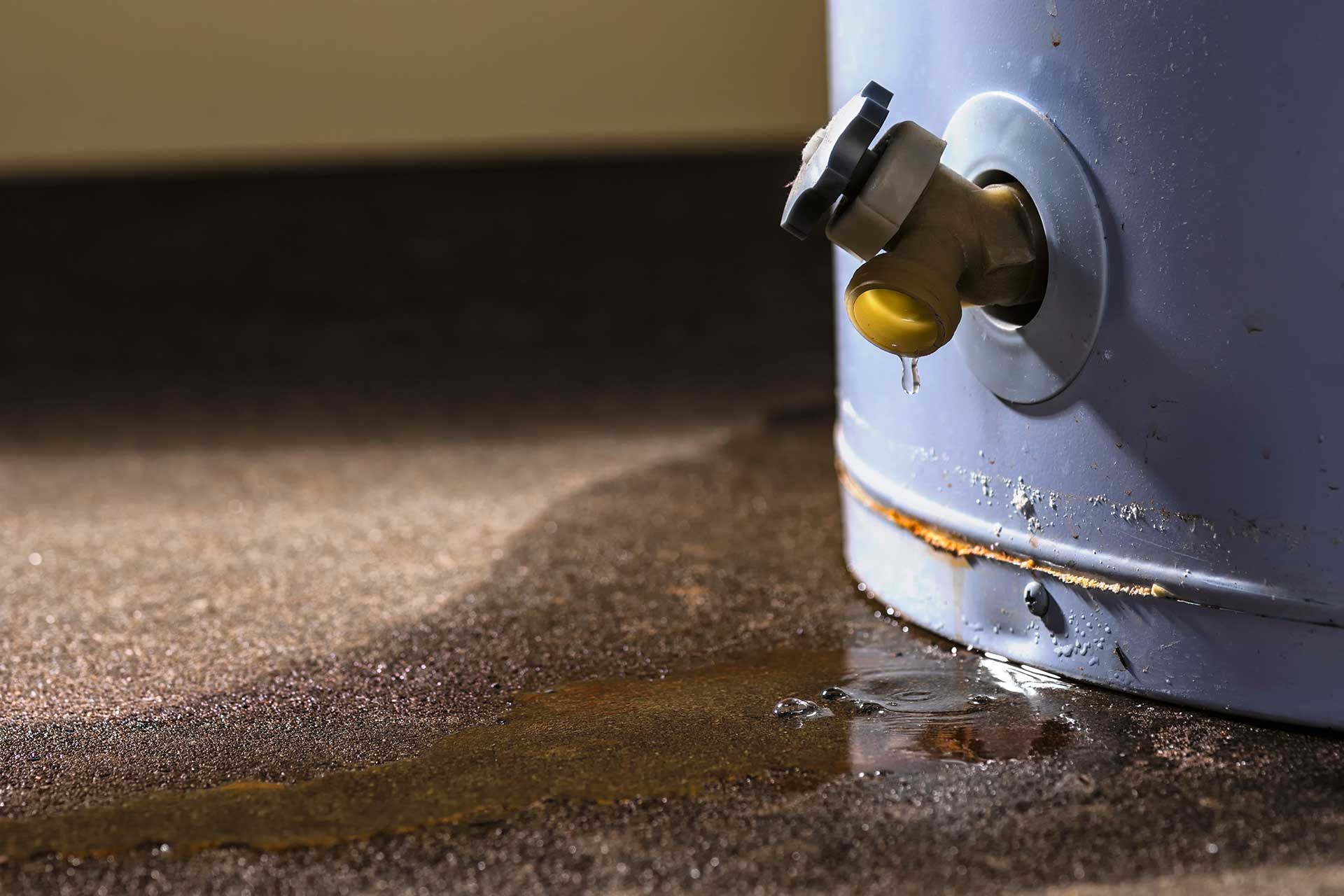
Water quality issues. In areas with hard water, the old tank’s drain valve may be crusted with mineral deposits. A stubborn drain valve can add 20 to 40 minutes to the removal process. Heavy sediment in the water supply can also slow the filling and testing phase.
Permit inspection timing. The installation itself might be done in 3 hours, but the permit inspection is a separate event. In some Tri-Valley jurisdictions, the inspector comes the same day. In others, the inspection may be scheduled for the following day. The water heater is fully operational before the inspection. The inspection verifies the work was done correctly, but you’re not waiting without hot water for it.
Same-Day Installation
For emergency replacements, most standard gas and electric tank installations can be completed same-day when parts are in stock. We keep the most common 40 and 50-gallon models on our trucks to avoid a second trip to the supply house. Heat pump and tankless conversions typically require a site assessment before installation day, since the electrical and venting requirements need to be confirmed in advance.
Need a water heater installed? Contact Barnett Plumbing and Water Heaters or call (925) 294-0171. We’ll give you a time estimate for your specific situation before we start.