
Sewer Camera Inspection in the Tri-Valley
See Exactly What Is Happening Inside Your Pipes
When your drains back up repeatedly or your yard has a wet spot that will not dry, something is wrong underground. A sewer camera inspection lets us see inside your pipes in real time, so we diagnose the problem accurately before recommending any repairs. Barnett Plumbing and Water Heaters provides HD sewer camera inspections for homes across Pleasanton, Dublin, Livermore, San Ramon, Danville, and the Tri-Valley.
How Sewer Camera Inspection Works
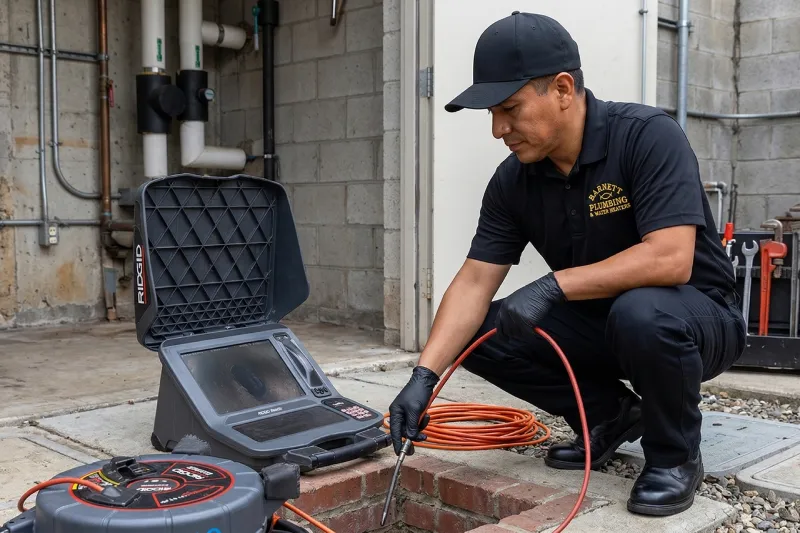
We insert a high-definition, waterproof camera into your sewer line through a cleanout access point. The camera feeds live video to a monitor as it travels through the pipe, showing us the condition of the interior walls, any blockages, and any structural damage. We record the footage so you can see exactly what we see.
The camera also transmits location data, so we can mark the precise spot where a problem exists. That means if a repair is needed, we know exactly where to dig instead of guessing.
What a Camera Inspection Can Diagnose
Root Intrusion
Tree roots are the most common cause of sewer line damage in the Tri-Valley. Roots find their way into pipe joints, grow inside the line, and eventually block flow completely. The camera shows us where the roots have entered and how far the intrusion extends.
Pipe Cracks and Breaks
Shifting soil, ground settling, and age can crack clay, cast iron, or Orangeburg sewer pipes. A camera inspection reveals the location and severity of the damage so we can recommend the right repair method.
Bellied or Sagging Pipe
A belly in the sewer line is a low spot where water and waste collect instead of flowing downhill to the main. Over time this creates recurring backups and can accelerate pipe deterioration. The camera shows exactly where the belly is and how severe the grade change is.
Grease and Debris Buildup
Heavy grease buildup or accumulated debris can restrict flow without fully blocking the line. The camera helps us determine whether a thorough cleaning will restore flow or whether the pipe itself is damaged and needs repair.
Need to See What Is Going On in Your Sewer Line?
When You Should Get a Camera Inspection
Recurring drain backups that keep coming back after clearing. Sewage odors in the yard or inside the home. Wet spots or unusually green patches in the lawn. Multiple slow drains throughout the house at the same time. Buying an older home and wanting to know the condition of the sewer line before closing. All of these are solid reasons to schedule a camera inspection.
Camera Inspection Before and After Sewer Repairs
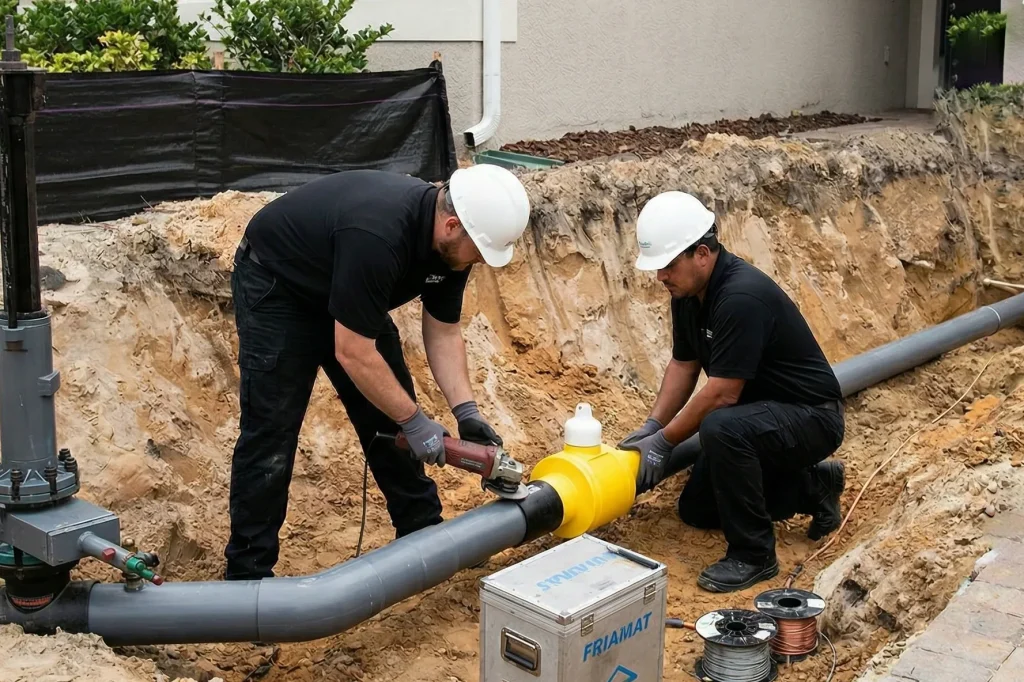
We run a camera inspection before sewer line repairs to confirm the diagnosis and plan the work accurately. After the repair is complete, we run the camera again to verify that the new pipe or liner is installed correctly and flowing as it should. This before-and-after approach gives you and us confidence that the job is done right.
If the camera reveals that your sewer line needs replacement, visit our sewer line replacement page for details on the repair options we offer.
Frequently Asked Questions
How long does a sewer camera inspection take?
Most residential sewer camera inspections take 30 to 60 minutes, depending on the length of the line and how accessible the cleanout is. If there is a blockage that needs clearing before the camera can pass, that adds some time.
Do I need a cleanout for a camera inspection?
A cleanout gives us the easiest access to your sewer line. If your home does not have one, we can sometimes access the line through a roof vent or by pulling a toilet. We can also install a cleanout if your home needs one.
Will I see the camera footage?
Yes. We show you the live feed during the inspection and explain what we are seeing. We also record the footage so you have it for your records or for an insurance claim if needed.
Should I get a sewer camera inspection before buying a home?
If the home is more than 20 years old, a sewer camera inspection is a smart investment before closing. Sewer line replacement can cost thousands of dollars, and a standard home inspection does not include the sewer line. Knowing the condition of the pipes before you buy can save you from an expensive surprise.
What types of pipe problems can the camera find?
The camera can identify root intrusion, pipe cracks, breaks, joint separation, bellied sections, grease buildup, and debris blockages. It shows the interior condition of the pipe in real time, so we can see exactly what is causing the problem.