
Expert Plumbing Services in Pleasanton, CA
Trusted Local Plumbers Backed by 900+ Five-Star Reviews
Full-Service Residential Plumbing for Pleasanton Homes
Pleasanton properties range from 1960s ranch homes downtown to newer builds in Ruby Hill. Each era of construction brings different pipe materials, different failure points, and different repair strategies. We handle all of them.
Every job follows California Plumbing Code (CPC) standards. We pull all required permits, coordinate city inspections, and guarantee our work.
A growing number of Pleasanton homes now include in-law units or accessory dwelling units (ADUs). These additions put serious demand on hot water systems, drain lines, and supply piping. We design and install systems that handle the increased load without compromising performance in the main house.
Water Heater Services
Plumbing Services
Tell Us What's Going On. We'll Handle It.
How Pleasanton's Local Environment Affects Your Plumbing
Pleasanton sits at the base of the eastern foothills of the Amador-Livermore Valley. The physical landscape creates specific, well-documented problems for residential plumbing. Knowing what happens underground explains why certain failures repeat in Pleasanton homes.
Expansive Clay Soils
Water Table and Drainage
Heat and Sun Exposure
Rodent Activity in Crawl Spaces
Neighborhood-Specific Plumbing Challenges Across Pleasanton
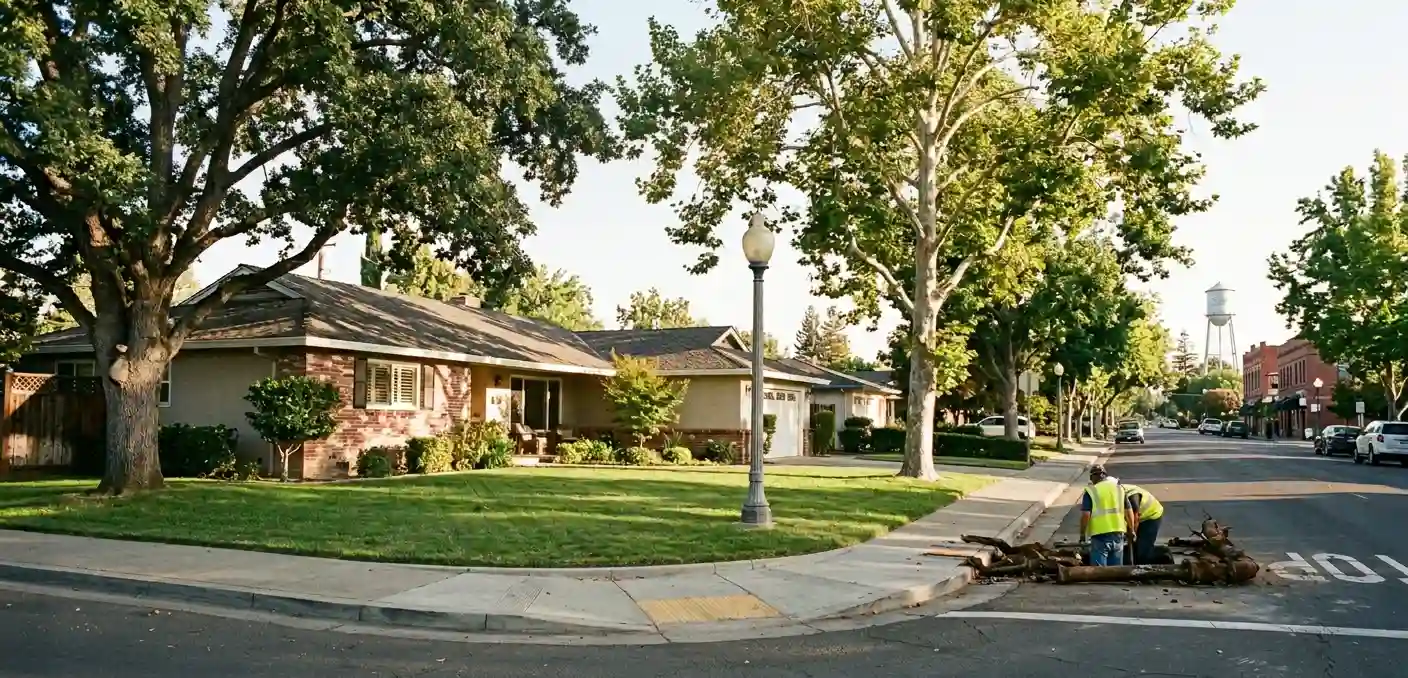
Downtown Pleasanton & Older Subdivisions
1950s-1970s / Cast Iron Sewers / Root Intrusion / Galvanized Steel
Ruby Hill
Late 1990s-2000s / Multiple Hot Water Systems / Pressure Regulation
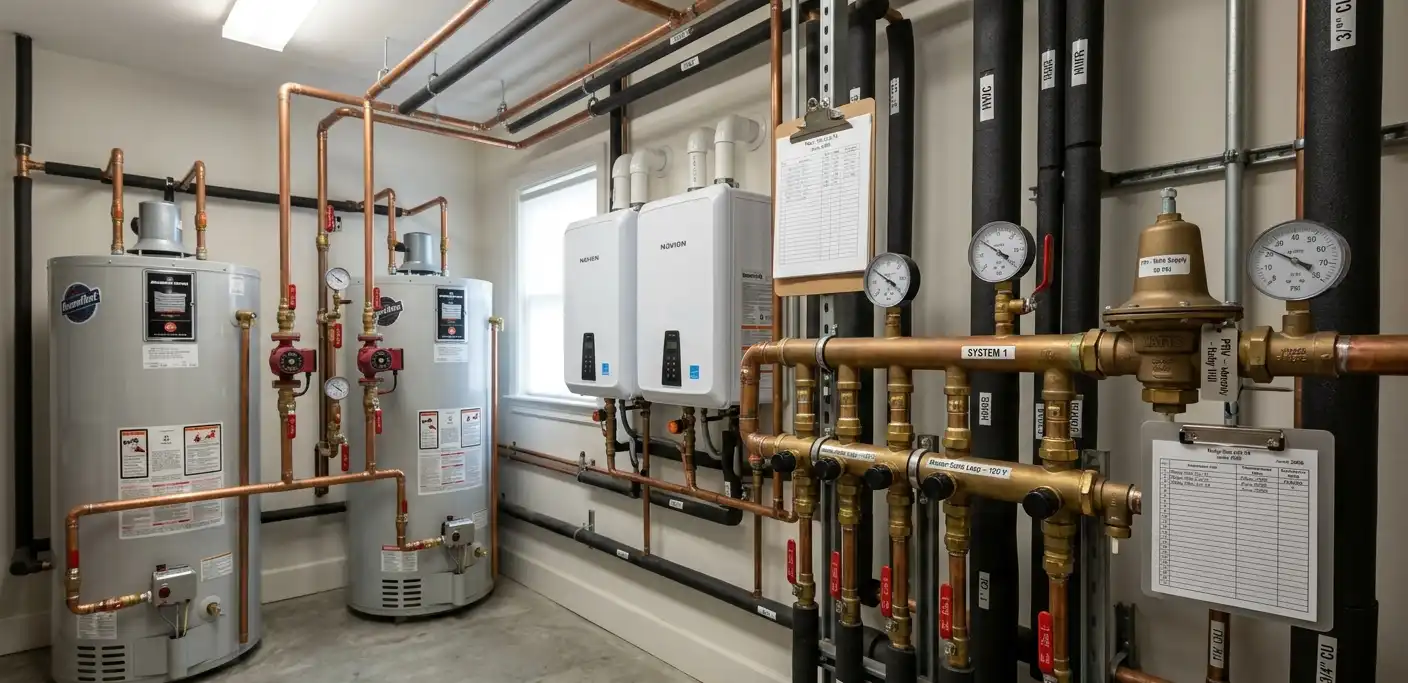
Larger custom homes with complex fixture counts and multiple hot water zones. Homeowners here expect quiet, concealed plumbing: recirculation loops, hidden water heating equipment, and low-noise sump pumps. Water pressure regulation is common because some lots sit at elevations where incoming municipal pressure exceeds safe residential operating range.
Kottinger Ranch
Hillside Homes / Access Challenges / Pressure-Reducing Valves
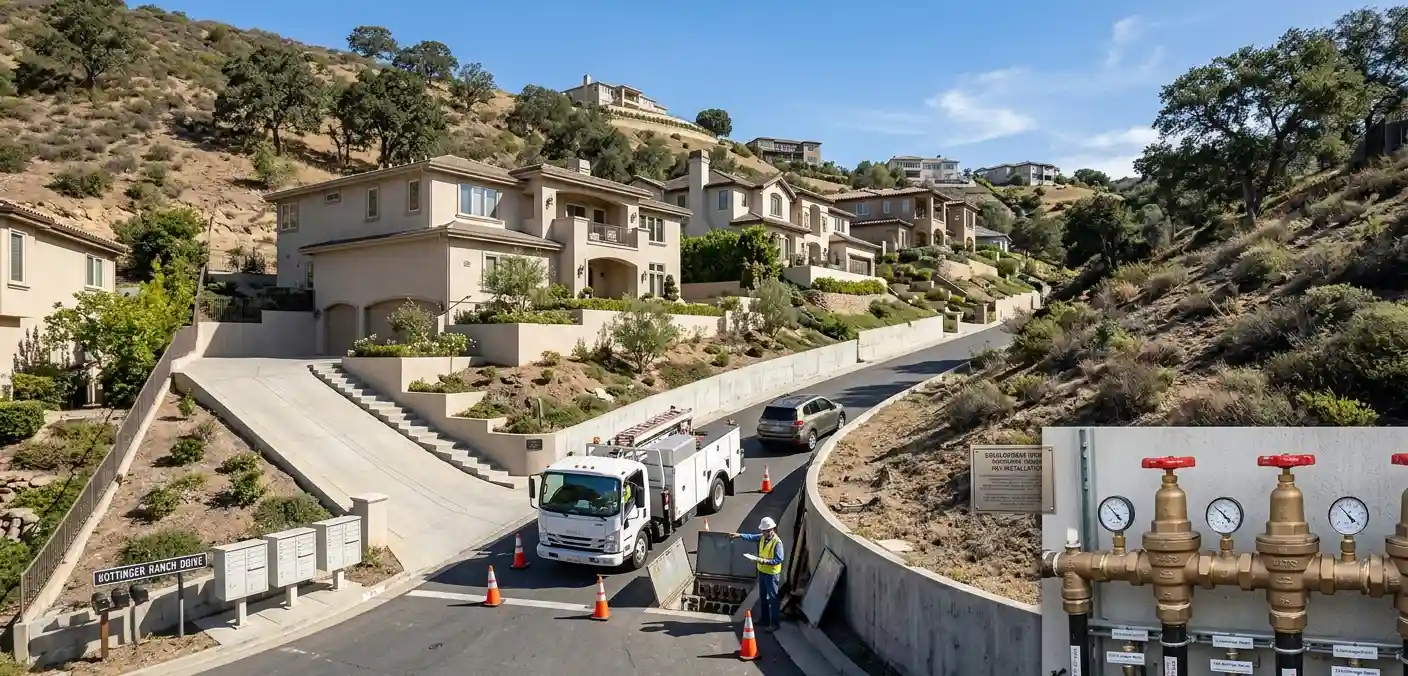
Steep driveways, tight lot configurations, and the logistics of moving equipment uphill add complexity to every project here. Elevation-related water pressure issues are standard. We install and calibrate pressure-reducing valves to protect fixtures and supply lines from excessive PSI.
Vintage Hills
1970s-1980s / Builder-Grade Systems / Aging Water Heaters
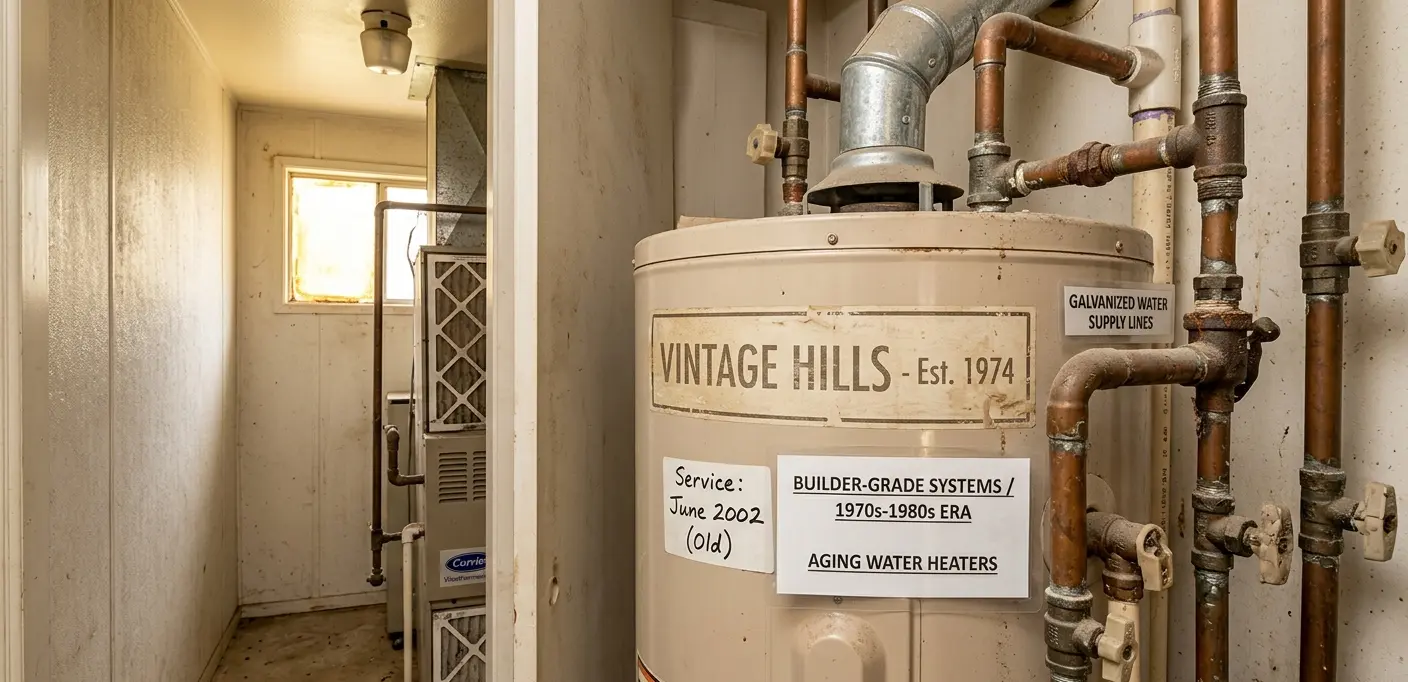
Homes here fall squarely in the window where original builder-grade water heaters, supply piping, and sewer connections are reaching the end of their expected life. Proactive inspection and phased replacement save these homeowners thousands compared to emergency repairs after a failure.
Pipe Material Lifespan Timeline
Galvanized Steel: 30-50 years. Expired for any home built before 1980.
Copper: 50-70 years. Approaching end of life for 1960s and 1970s homes.
Cast Iron: 50-75 years. Expired for pre-1970s sewer lines.
PEX: 40-50+ years. Newer material, but vulnerable to rodent damage.
Not Sure What's Wrong? Describe It. We'll Figure It Out.
Crawl Space Leaks: What to Watch For and How We Fix Them
A slow leak under your house does more damage than a dramatic pipe burst in the kitchen. Crawl space leaks go unnoticed for weeks. By the time you smell mold or notice the water bill, moisture has already reached the subfloor, the floor joists, or the foundation.
Older Pleasanton homes are especially vulnerable. Aging copper and galvanized supply lines corrode from the outside in, and connections loosen as the house settles over decades.
Warning Signs
A damp or musty smell that won’t go away. A water bill that jumps without explanation. Increased humidity inside the house. The sound of running water when nothing is turned on. Because crawl spaces are hidden, the damage usually shows up inside the home before anyone realizes there is a plumbing problem below.
Why DIY Doesn't Work Here
How We Fix It
Tree Root Intrusion in Pleasanton Sewer Lines
Pleasanton’s mature trees are one of the city’s best features. Their root systems are also the number one threat to your underground sewer line. Roots seek moisture, and a sewer pipe joint is an easy target.
Symptoms
Recurring slow drains on the lowest level of the house. Gurgling sounds from toilets or floor drains after running water elsewhere. Sewage odor in the yard. Patches of grass that are greener or lusher than the surrounding lawn directly over the sewer line path.
Why Snaking Doesn't Solve It
A rented drain snake clears the symptom. The roots grow back within weeks. Each cycle of root regrowth and removal weakens the pipe further because the entry points in the pipe wall stay open. Without a permanent repair to the pipe itself, snaking is maintenance you’ll repeat every few months.
How We Fix It
We start with a sewer camera inspection to confirm root penetration, identify the pipe material, and measure the full extent of damage. For moderate root invasion where the pipe walls are still structurally sound, mechanical rootering combined with hydro-jetting restores full flow. If the pipe is compromised, trenchless pipe bursting replaces the damaged line without excavating your yard. For severe structural failure, pipe bursting pulls a new HDPE line through the same path and avoids traditional open-trench excavation.
Describe Your Problem. We'll Call You Back Today.
Pleasanton Plumbing Permits, Codes, and What You Need to Know
Permits exist to protect you, your home, and your neighbors. Unpermitted plumbing work can void your homeowner’s insurance, create liability during a sale, and result in fines from the City of Pleasanton.
Permits are required for water heater replacement, whole-house repiping, sewer line replacement, new gas line installation, and any work that connects to the city water or waste main.
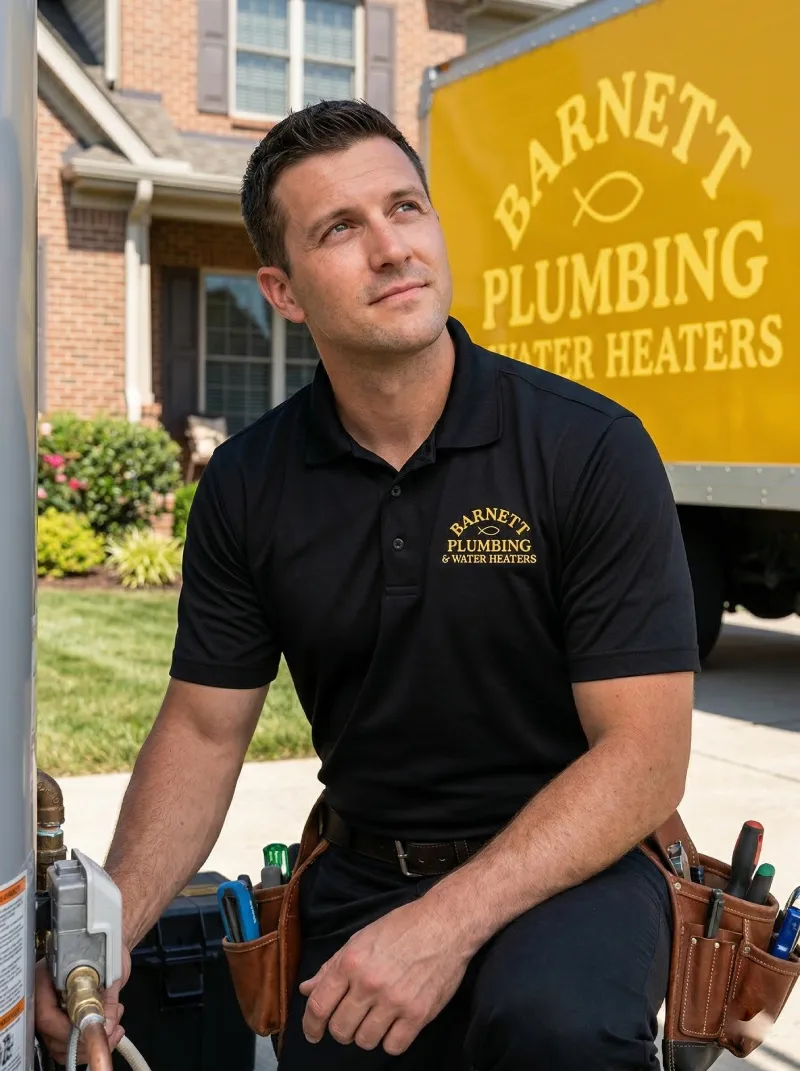
We handle every step. When you hire Barnett Plumbing, your permits are filed, your inspections are scheduled, and your completed work is documented and code-compliant. You don’t touch a single form.
Why Pleasanton Homeowners Choose Barnett Plumbing & Water Heaters
Over 900 families across the Tri-Valley have left us five-star reviews. We’ve held CA Contractor License #910529 (C-36 Plumbing, C-16 Fire Protection) since 2005. We carry full general liability coverage, workers’ compensation through Benchmark Insurance Company, and a $15,000 bond through American Contractors Indemnity Company.
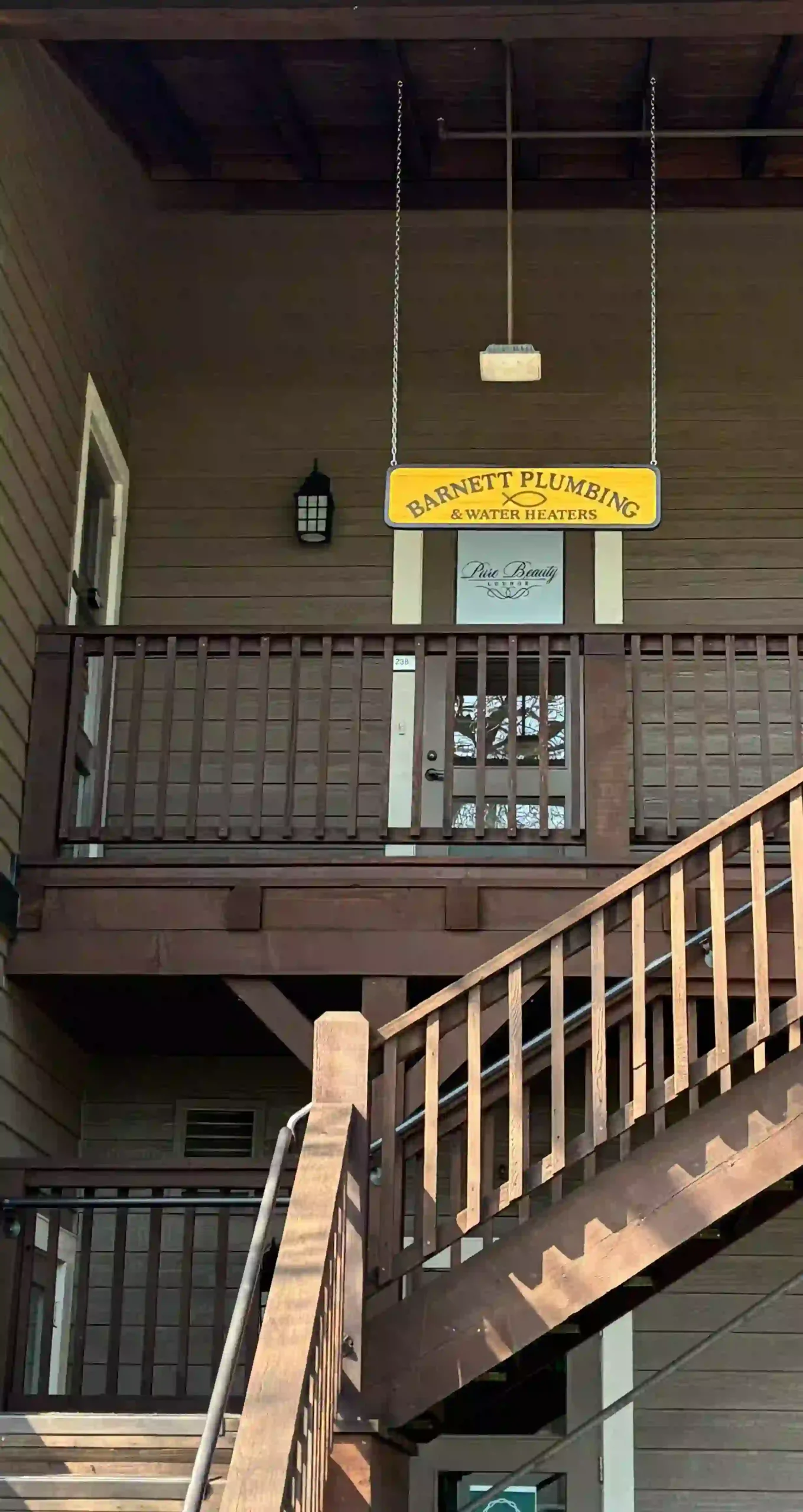
Our Pleasanton office is at 4713 First Street, Suite 242, Pleasanton, CA 94566. We stock American Standard, Rheem, and Bradford White equipment on our trucks through Tri-Valley distributors, so parts and warranty support stay local.
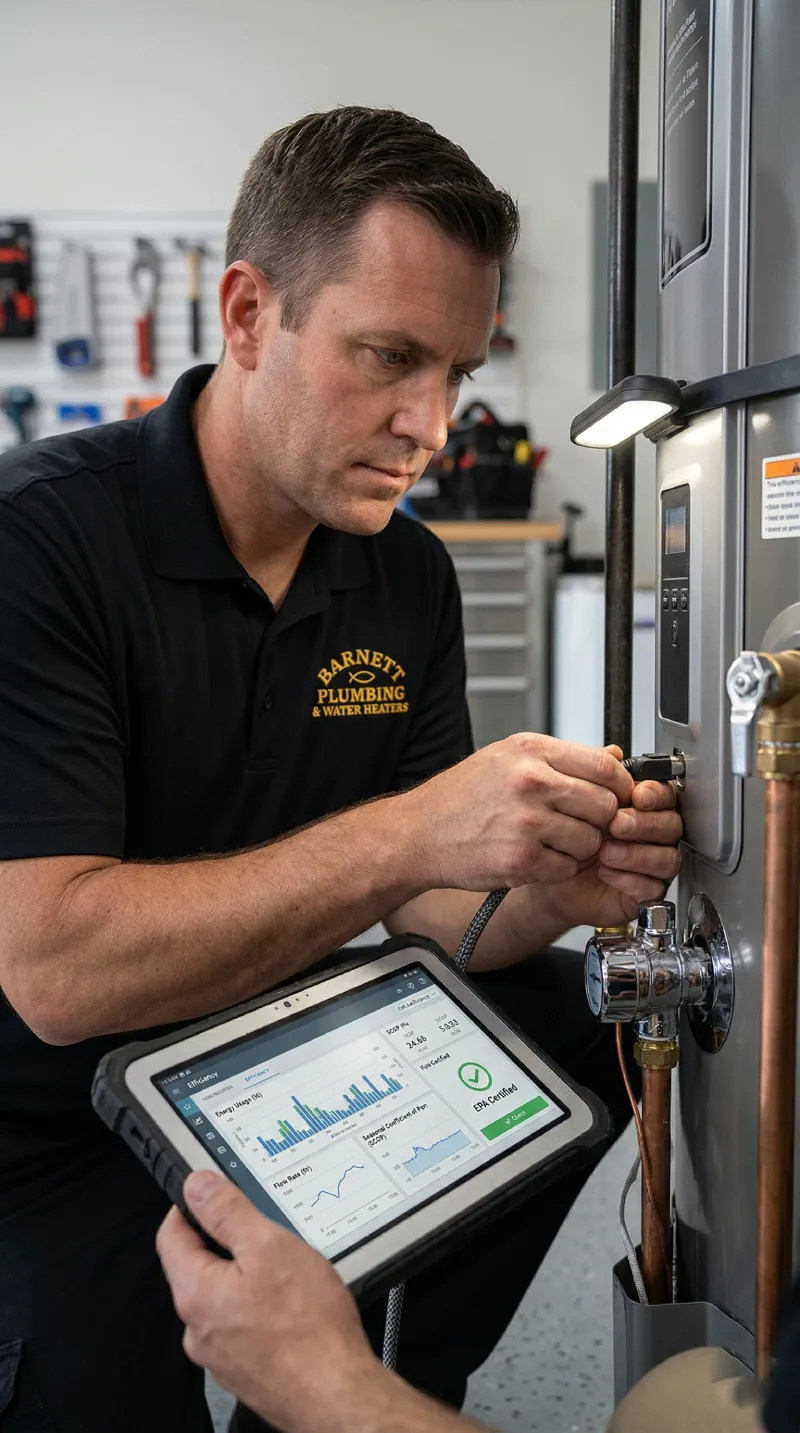
Every technician arrives prepared to diagnose your issue and present your options clearly. That includes honest assessments of when a repair makes sense versus when replacement costs less over time.
Call (925) 399-8782 to schedule service.
Frequently Asked Questions
What areas of Pleasanton do you serve?
All of them. Downtown, Ruby Hill, Kottinger Ranch, Vintage Hills, Birdland, Pleasanton Valley, and every surrounding neighborhood. Our Pleasanton office is at 4713 First Street, Suite 242.
Do I need a permit to replace a water heater in Pleasanton?
Yes. The City of Pleasanton requires a permit and a post-installation inspection for water heater replacement. We handle the entire permitting process. You don’t need to visit city hall or fill out any paperwork.
How do I know if my home needs repiping?
Rust-colored water, low pressure at multiple fixtures, visible corrosion on exposed pipes, and frequent pinhole leaks are the common signs. Homes built before the mid-1970s with original galvanized steel pipes are strong candidates. We provide a free assessment to determine whether repiping or targeted repair is the right call for your situation.
What is trenchless sewer repair?
How long does a water heater installation take?
Call (925) 399-8782. A Barnett Plumber Will Answer.
Plumbing Services in Your Area
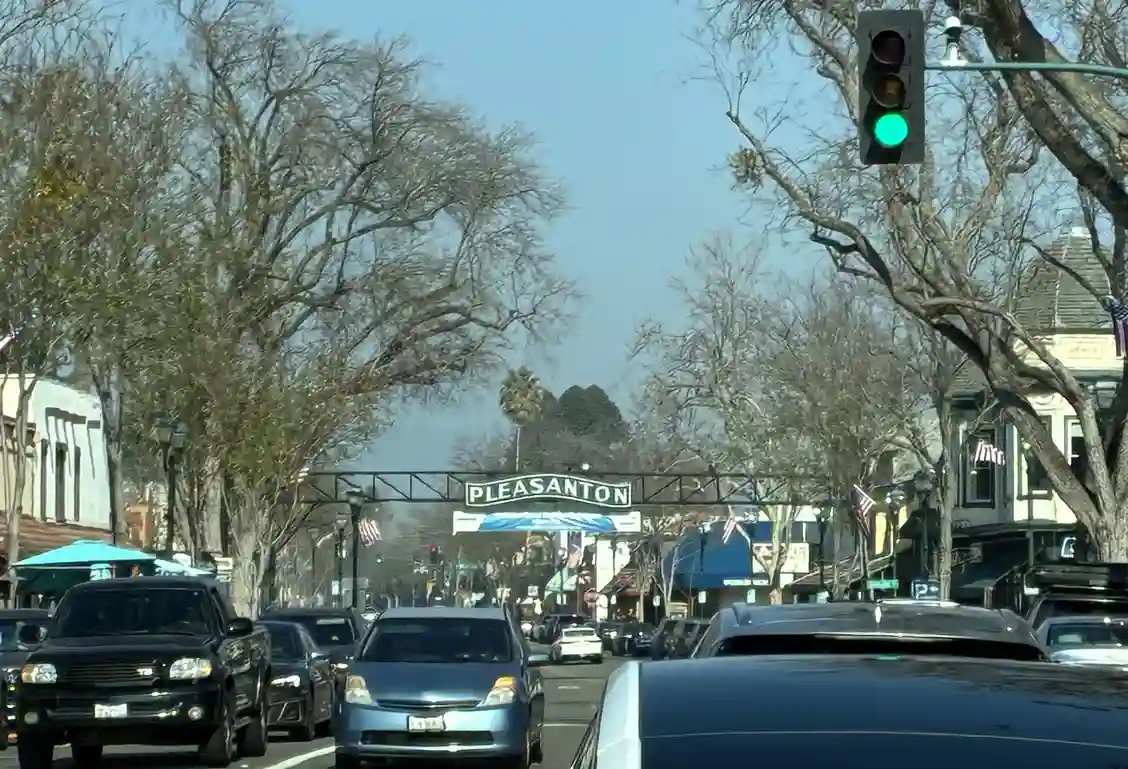
Directions to Barnett Plumbing from Downtown Pleasanton
From the Pleasanton Arch (Main Street)
Start at the Pleasanton Arch on Main Street. Head south toward First Street. Turn right (west) onto First Street and continue about one-third of a mile. Our office is at 4713 First Street, Suite 242, on the right. Two minutes from downtown. Street parking is available along First Street, with additional lot parking next to the building.
From Stoneridge Shopping Center
Head east on Stoneridge Drive toward Hopyard Road. Turn right (south) onto Hopyard Road, continue to First Street, then turn left (east). Continue about one mile. Our office is on the left at 4713 First Street, Suite 242. About five minutes depending on traffic.