Skip to content

Professional Plumbing Contractor in Livermore, CA

Barnett Plumbing Headquarters, Serving Livermore Since 2005

A pinhole leak behind the wall turned into a puddle on the garage floor overnight. The water heater in the utility closet is 14 years old and making popping sounds every time it fires up. A sewer cleanout in the backyard is backing up after every heavy rain. Livermore homeowners deal with these problems year-round, and our office is right here in town to handle them.

Barnett Plumbing & Water Heaters is headquartered at 780 E. Airway Blvd, Livermore, CA 94551. This is home base. Call (925) 294-0171 and a Barnett plumber will be at your door.

CA Contractor License #910529 (C-36 Plumbing, C-16 Fire Protection)
Get Help Today
Fast Response. No Obligation.

Complete Residential Plumbing for Livermore Homes

Livermore’s housing stock tells the story of the city’s growth. Postwar tract homes near Springtown and Sunset run on plumbing systems from the 1950s and 1960s. South Livermore properties carry agricultural-era infrastructure, including well water connections and septic systems that were never fully converted. Newer developments near the national labs use modern materials, but builder-grade fixtures and connections still wear out faster than homeowners expect.

Every job follows California Plumbing Code (CPC) standards. We pull all required permits through the City of Livermore Building Division, coordinate inspections, and guarantee our work.

Livermore’s ADU boom has put serious demand on existing plumbing infrastructure. Garage conversions and backyard cottages need dedicated hot water, extended drain runs, and upgraded supply lines. We design systems that serve both the main house and the new unit without pressure drops or hot water shortages.
Water Heater Services

Plumbing Services

Tell Us What's Going On. We'll Handle It.

How Livermore's Valley Environment Affects Your Plumbing

Livermore sits in a broad inland valley east of the coastal hills. The geography, the soil, the water chemistry, and the climate all create conditions that shorten the working life of residential plumbing systems.

Hard Water and Mineral Buildup

Livermore’s municipal water measures 213 to 287 parts per million of calcium carbonate. That qualifies as moderately hard to very hard. Over time, mineral deposits accumulate inside water heater tanks, reduce heating efficiency, coat the interior of supply pipes, and clog aerators and showerheads. Hard water is the primary reason Livermore water heaters fail earlier than their rated lifespan suggests.

Alluvial Soils and Liquefaction Risk

The valley floor consists of alluvial deposits carried down from surrounding hills. Sand, gravel, silt, and clay mix in layers that behave unpredictably during ground movement. During seismic events, saturated alluvial soils can liquefy, shifting the ground around buried pipes and creating sudden stress on joints and connections that were holding fine the day before.

The Greenville Fault

The Greenville Fault runs through northeastern Livermore and is capable of producing earthquakes up to magnitude 6.9. The 1980 Livermore earthquake sequence (magnitude 5.6 and 5.4 events) caused documented pipe damage throughout the city. Older rigid plumbing systems, especially galvanized steel and cast iron, are most vulnerable because they cannot flex with ground movement the way modern PEX and properly supported copper can.

Heat and Wind

Livermore runs hotter than most Tri-Valley cities. Summer temperatures regularly exceed 100 degrees in the valley’s interior. Sustained heat degrades rubber gaskets, dries out valve seals, and accelerates thermal expansion stress on copper lines. The Livermore Valley wind corridor adds another factor, driving rapid temperature swings that cycle expansion and contraction through exterior plumbing components.

Neighborhood-Specific Plumbing Challenges Across Livermore

Livermore grew in distinct phases, from agricultural ranch land to a Cold War research hub to the suburban city it is today. Each era left behind different plumbing systems with d ifferent failure patterns.

Springtown

Early 1960s / Tract Homes / Galvanized Steel / Original Sewer Lines
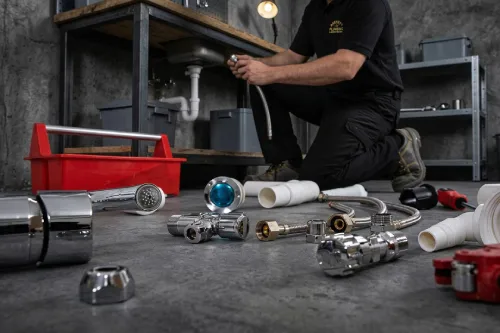
Plumber arranging various plumbing fixtures and tools on workbench with red toolbox

Originally planned as a retirement community, Springtown became one of Livermore’s first large-scale residential developments. Homes here are 60+ years old. We regularly find galvanized steel supply lines that restrict water flow, corroded shut-off valves, and cast iron sewer connections that have cracked or separated at joints. Many of these homes are strong candidates for whole-house repiping.

Sunset East & Sunset West

1950s-1970s / Established Suburban / Aging Copper / Hard Water Damage
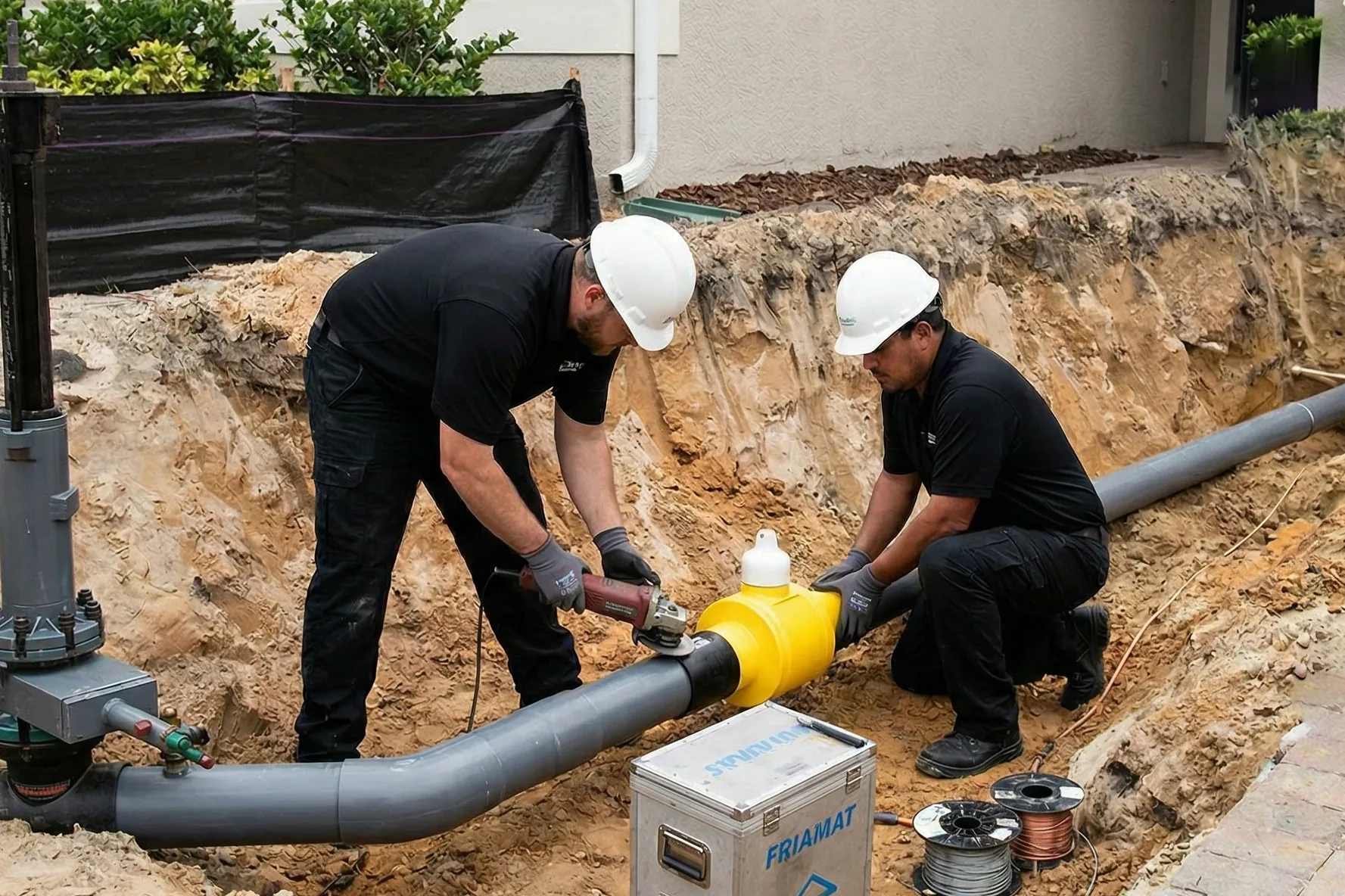
Two plumbers in white hard hats installing underground gas line with yellow valve connector in excavated trench

Sought-after neighborhoods with tree-lined streets and well-maintained homes. Original copper supply lines from the 1960s and 1970s are approaching the 50 to 70-year mark. Hard water mineral buildup inside these older copper pipes reduces flow over time and accelerates corrosion at joints and elbows. Water heaters in these homes often show heavy sediment accumulation years before the tank itself would otherwise fail.

South Livermore (Wine Country)

Pre-1950s Roots / Agricultural Legacy / Well Water / Septic Conversions
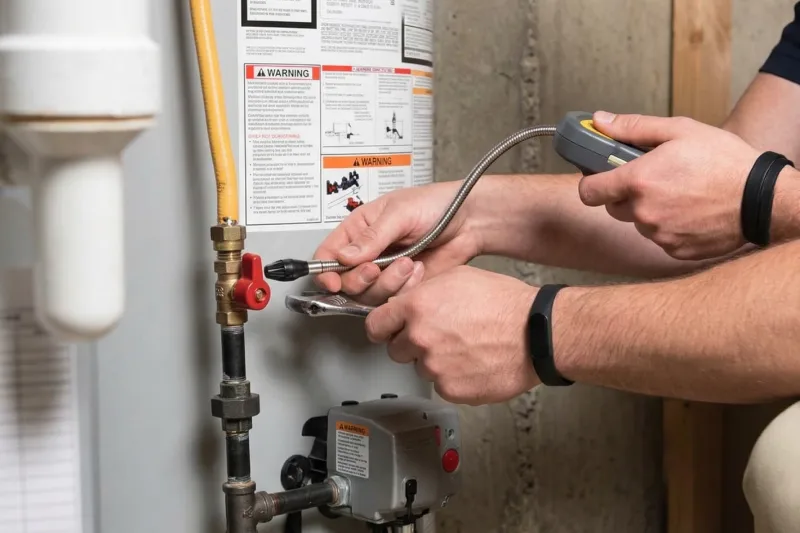
Plumber inspecting water heater connections with diagnostic tool

South Livermore’s vineyard properties and older ranches carry infrastructure from a different era. Some still operate on private well water with hard mineral content that corrodes pipes from the inside. Others have aging septic systems that need conversion as the city extends municipal sewer service south along Greenville Road. Galvanized and cast iron piping in ranch-era homes has long exceeded its useful life.

Downtown Livermore

Mixed Eras / Historic Buildings / Renovation Plumbing / Code Upgrades
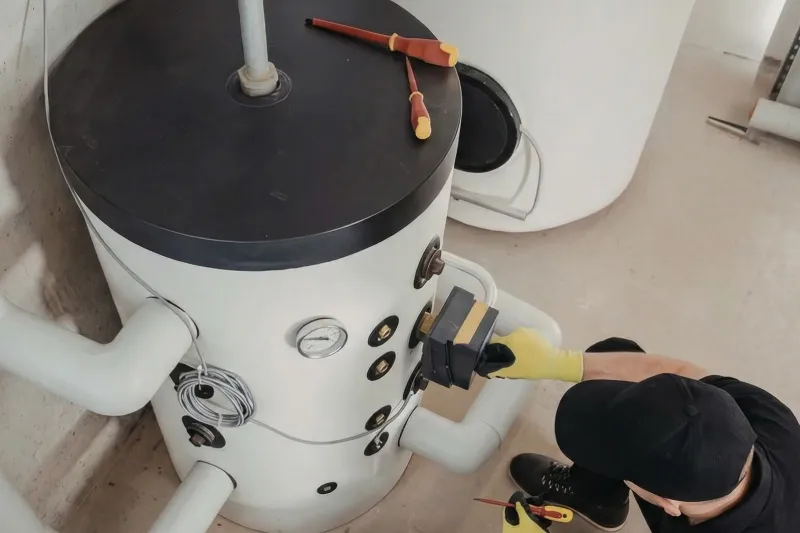
Plumber working on water heater installation and repair service

Downtown properties range from pre-1950s commercial buildings to renovated residential units. Older structures often need complete plumbing overhauls to meet current code when undergoing renovation. We handle the full permitting and inspection process for downtown projects, including fire suppression tie-ins where required.

North Livermore & Lab-Adjacent

1960s-1980s / Professional Community / Mid-Life Systems / Water Heater Age
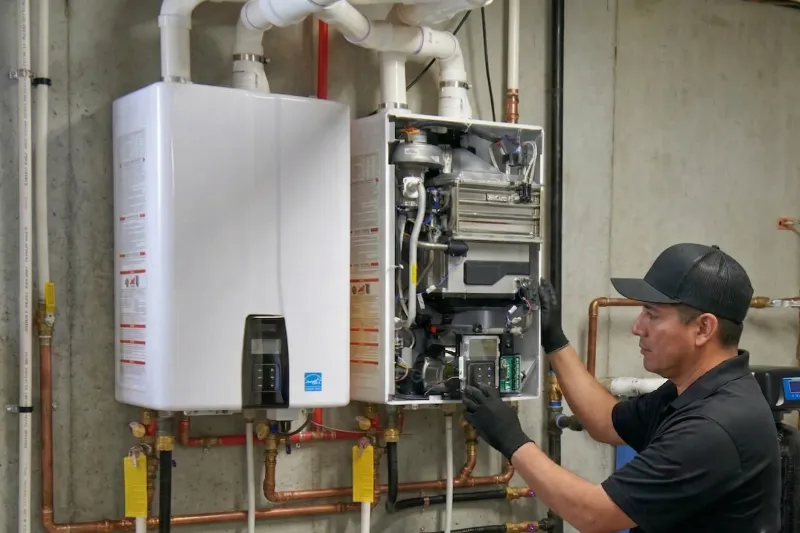
Plumber installing and servicing a tankless water heater system with open panel showing internal components

Neighborhoods developed as the Lawrence Livermore and Sandia workforce grew. Homes in the 40 to 60-year range where original water heaters have been replaced at least once, but supply piping, drain lines, and sewer laterals are still original. Proactive inspection catches problems before they escalate into emergency calls.

Newer Developments (East Side)

2000s-Present / Modern Materials / Builder-Grade Fixtures / Warranty Gaps
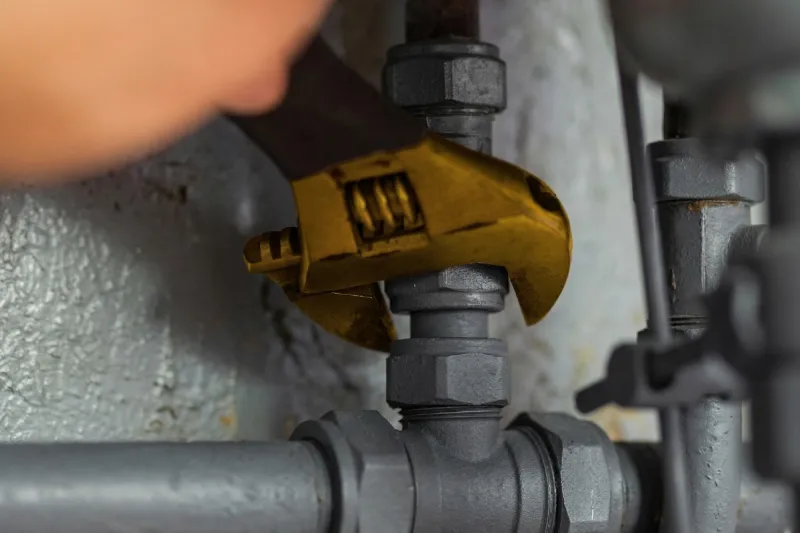
Yellow water shut-off valve on residential plumbing pipes during repiping service

PEX and copper systems in good structural condition, but builder-grade water heaters, garbage disposals, and fixture connections installed during mass construction tend to underperform within 8 to 12 years. Manufacturer warranties often cover the unit but not the labor to replace it or the water damage from a failure.

Pipe Material Lifespan Timeline

Galvanized Steel: 30-50 years. Expired for any home built before 1980.
Copper: 50-70 years. Approaching end of life for 1960s and 1970s homes. Hard water accelerates interior corrosion.
Cast Iron: 50-75 years. Expired for pre-1970s sewer lines.
PEX: 40-50+ years. Newer material, but vulnerable to rodent damage and UV exposure.
Polybutylene: 10-15 years before failure risk. Installed 1975-1996. Becomes brittle from chlorinated water.
Not Sure What's Wrong? Describe It. We'll Figure It Out.

Hard Water in Livermore: What It Does to Your Plumbing Over Time

Every gallon of water flowing through your Livermore home carries dissolved calcium and magnesium. At 213 to 287 ppm, Livermore’s water sits firmly in the “hard” to “very hard” range. That mineral content is safe to drink, but it takes a measurable toll on your plumbing system over years of daily use.

Inside Your Water Heater

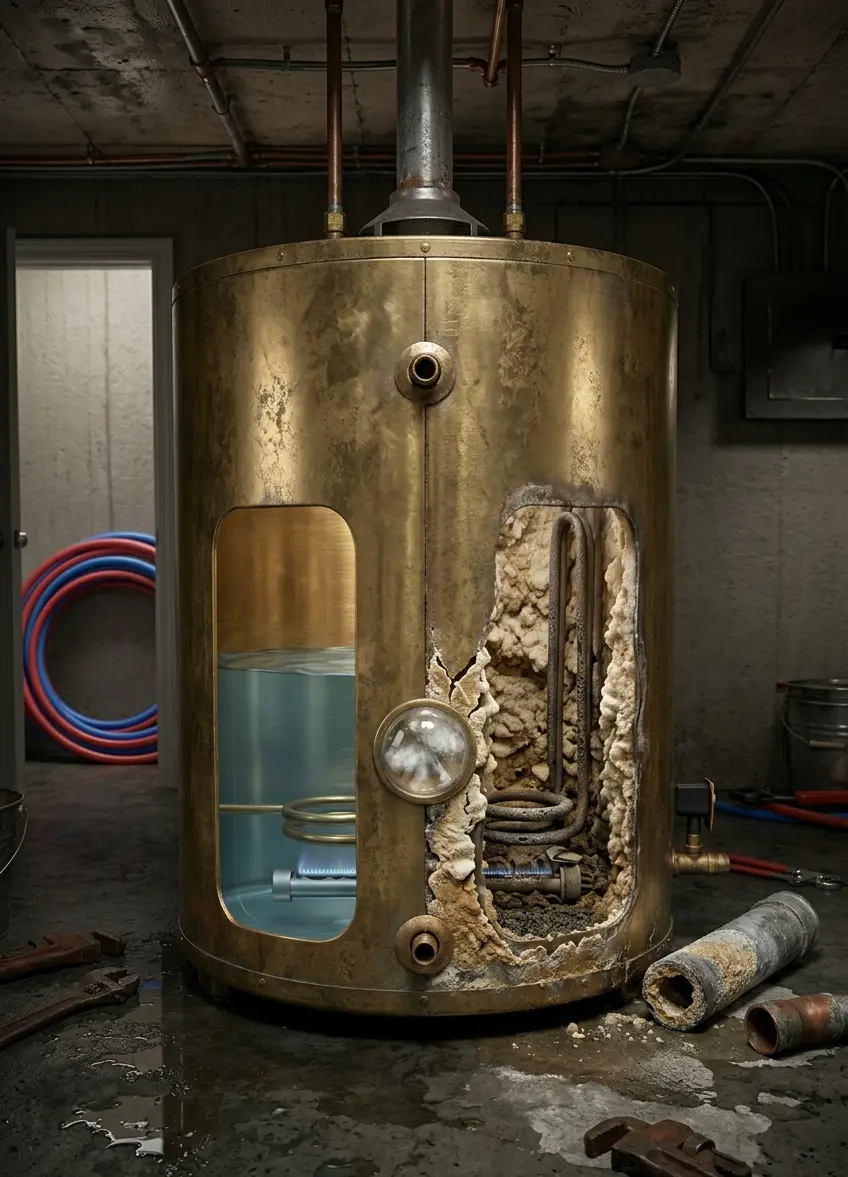
Mineral sediment settles at the bottom of the tank with every heating cycle. Over months and years, that layer thickens into a calcite crust that insulates the water from the burner. The heater runs longer, works harder, and burns more gas or electricity to reach the same temperature. The popping or rumbling sound you hear from an aging water heater is steam escaping through cracks in that sediment layer. Annual flushing extends tank life. Ignoring it shortens it by years.

Inside Your Pipes

Scale deposits narrow the interior diameter of supply pipes over decades. Flow drops gradually, so gradually that most homeowners adjust without realizing their water pressure has declined. Older galvanized steel pipes are the worst affected because mineral buildup bonds aggressively to the rough interior surface. Copper pipes accumulate scale more slowly but are not immune, especially at elbows and tee fittings where turbulence concentrates deposition.

What You Can Do

Annual water heater flushing is the single most effective maintenance step for Livermore homes. Beyond that, a whole-house water softener or conditioning system reduces mineral content before it reaches your fixtures and appliances. We install and service both. For homes with visible flow reduction, a repipe to PEX eliminates the accumulated buildup permanently and restores full flow throughout the house.
Old water heater tank with mineral buildup and corroded pipes in basement utility room

Sewer Line Damage in Livermore's Older Neighborhoods

Mature trees in Springtown, Sunset, and downtown Livermore have had decades to send roots toward underground sewer lines. Clay pipe joints in homes built before the 1980s are the most common entry point. Each time roots are snaked out, the pipe wall weakens further at the intrusion points.

How We Fix It

A sewer camera inspection confirms the location, the pipe material, and the extent of damage. For moderate root invasion, mechanical rootering and hydro-jetting restore full flow. If the pipe is compromised, trenchless pipe bursting replaces the line without digging up your yard or driveway.
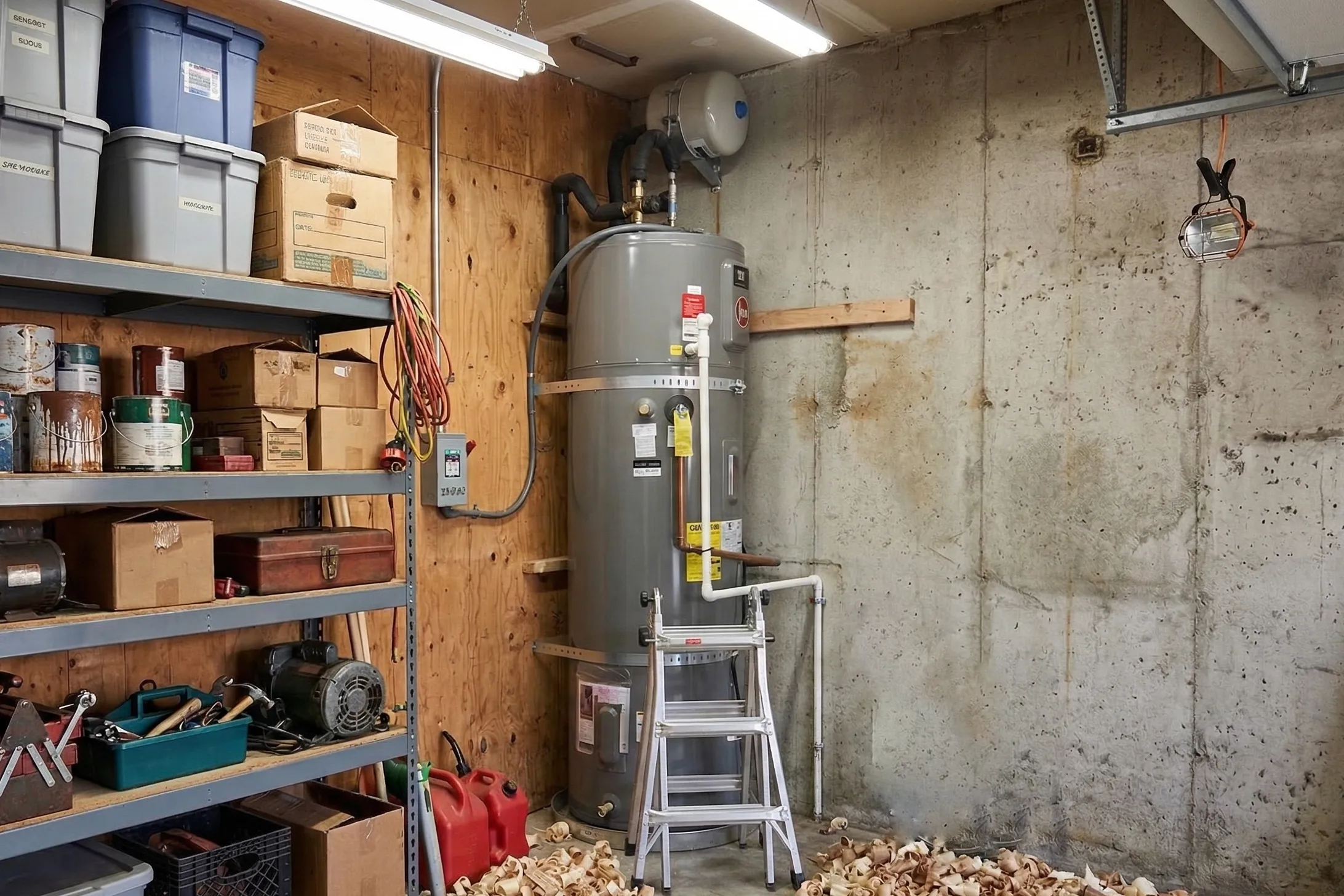
Water heater installation in Livermore workshop with tools and supplies on shelving

Describe Your Problem. We'll Call You Back Today.

Livermore Plumbing Permits, Codes, and What You Need to Know

The City of Livermore requires a permit for all plumbing work that involves altering, replacing, or installing new systems connected to the structure. That covers water heater replacementwhole-house repipingsewer line replacement, new gas line installation, and any connection to the municipal water or sewer main.

Building inspections are available within 24 hours of request through the Livermore Building Division. We handle every step of the permit process. When you hire Barnett Plumbing, your permits are filed, your inspections are scheduled, and your completed work is documented and code-complian
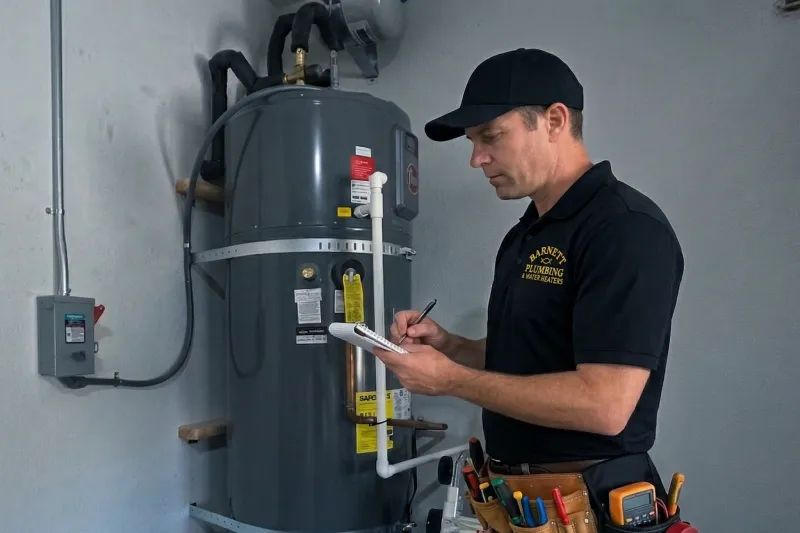
Barnett Plumbing technician inspecting heat pump water heater during installation or maintenance

Why Livermore Homeowners Choose Barnett Plumbing & Water Heaters

Over 900 families across the Tri-Valley have left us five-star reviews. We’ve held CA Contractor License #910529 (C-36 Plumbing, C-16 Fire Protection) since 2005. We carry full general liability coverage, workers’ compensation through Benchmark Insurance Company, and a $15,000 bond through American Contractors Indemnity Company.

Our Livermore headquarters is at 780 E. Airway Blvd, Livermore, CA 94551. We stock American Standard, Rheem, and Bradford White equipment on our trucks through local distributors, so parts and warranty support never come from out of town.

Every technician arrives prepared to diagnose your issue and present your options clearly. That includes honest assessments of when a repair makes sense versus when replacement costs less over time.

Call (925) 294-0171 to schedule service. 
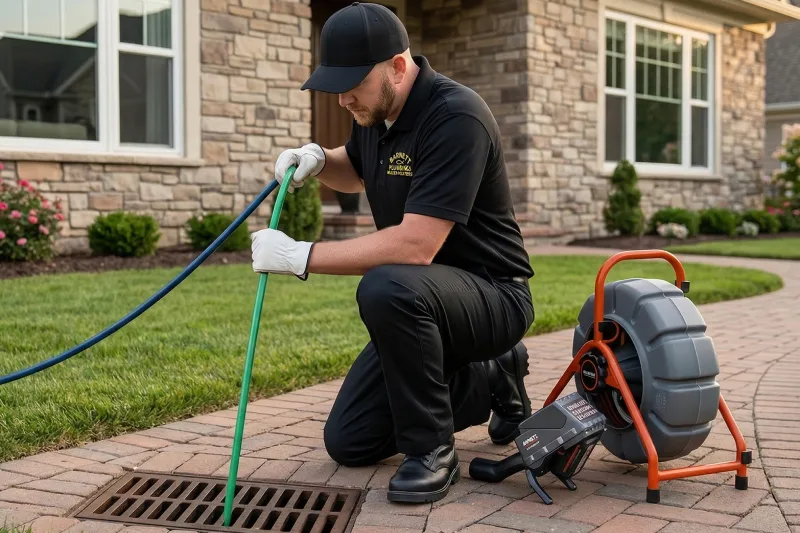
Plumber in black uniform performing drain cleaning service with professional equipment at residential home

Frequently Asked Questions

All of them. Springtown, Sunset East, Sunset West, South Livermore, downtown, north Livermore, and every surrounding neighborhood. Our headquarters is right here in Livermore at 780 E. Airway Blvd.
Mineral sediment from Livermore’s hard water (213-287 ppm calcium carbonate) builds up at the bottom of the tank over time. When the burner heats water trapped beneath that sediment layer, steam escapes through cracks in the crust and creates popping or rumbling sounds. Annual flushing removes the buildup. If the sounds are loud or constant, the sediment layer may be too thick to flush effectively, and tank replacement becomes the better option.
Yes. Water heater replacement requires a permit and a post-installation inspection through the Livermore Building Division. We handle the entire permitting process. You do not need to visit the permit center or file any paperwork yourself.
Yes. The City of Livermore is extending municipal sewer service south along Greenville Road. As connections become available, we handle the full conversion from septic to city sewer, including the lateral connection, backflow prevention, and all required permits and inspections.
A standard tank replacement takes 2 to 4 hours. Tankless installations or conversions from tank to tankless may take longer due to additional gas line, venting, or electrical work. We give you a clear timeline before any work starts.

Call (925) 294-0171. A Barnett Plumber Will Answer.

Plumbing Services in Your Area

Directions to Barnett Plumbing in Livermore

From Downtown Livermore (First Street)

Head east on First Street toward Livermore Avenue. Turn left (north) onto Livermore Avenue and continue to East Airway Boulevard. Turn right (east) onto E. Airway Blvd. Our office is at 780 E. Airway Blvd, on the right. About five minutes from downtown.

From I-580

Take the Airway Blvd exit from I-580. Head east on Airway Blvd. Our office is at 780 E. Airway Blvd, just past the intersection with Kitty Hawk Road. Visible from the road with parking available on site.